5 Bedtime Habits That Quietly Strain Your Neck

Scrolling in bed, stacking pillows and dozing off on the sofa can all leave your neck in an awkward position. Here are five common habits and a simple fix for each one.
Some of the biggest strains on your neck happen in the hour before you fall asleep.
We tend to blame the night itself for a stiff neck, but the evening matters too. The positions you hold while winding down, often for long stretches and without noticing, can set the tone for how your neck feels at breakfast.
These five habits are common and easy to change. This is general wellness guidance, not medical advice. If neck discomfort is regular or severe, please see a healthcare professional.
Habit 1: Scrolling in bed with your chin tucked
Holding a phone low while you lie down pulls your chin towards your chest. Add a long scroll and the neck stays bent well past the point of comfort.
The fix: raise the phone closer to eye level, rest your elbows on your chest or a cushion, and set a time limit so you stop before you are drowsy. Better still, put the phone down for the last fifteen minutes and let your eyes rest.
A small stand or a rolled towel under your elbows takes the weight off your neck and shoulders.
A tidy cue to remember is that a screen belongs at eye level, not in your lap.
Habit 2: Stacking pillows into a tower
Two or three pillows can push the head forward and leave the neck curled for hours. It feels cosy at first, but the angle rarely suits the neck once you drift off.
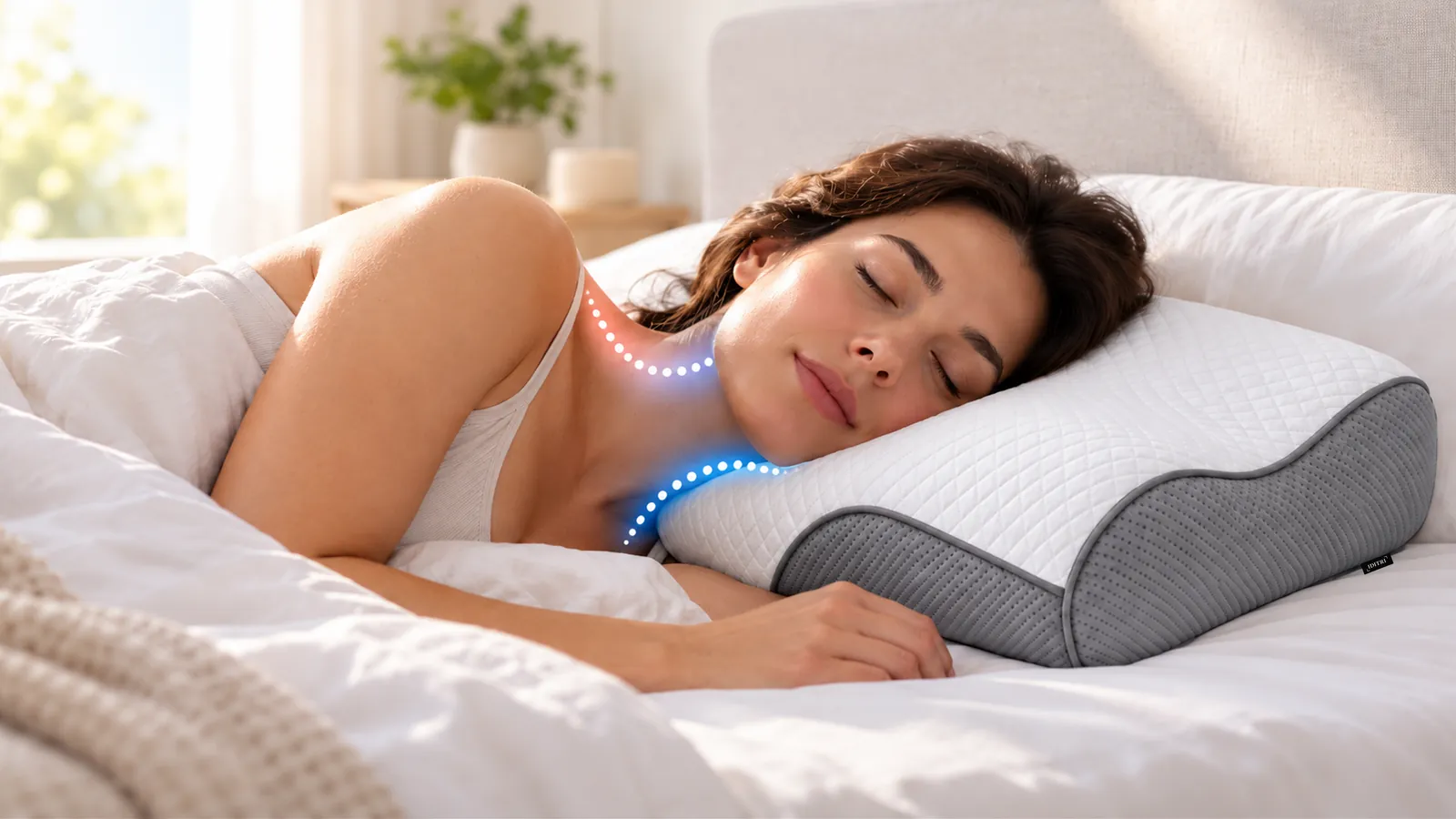
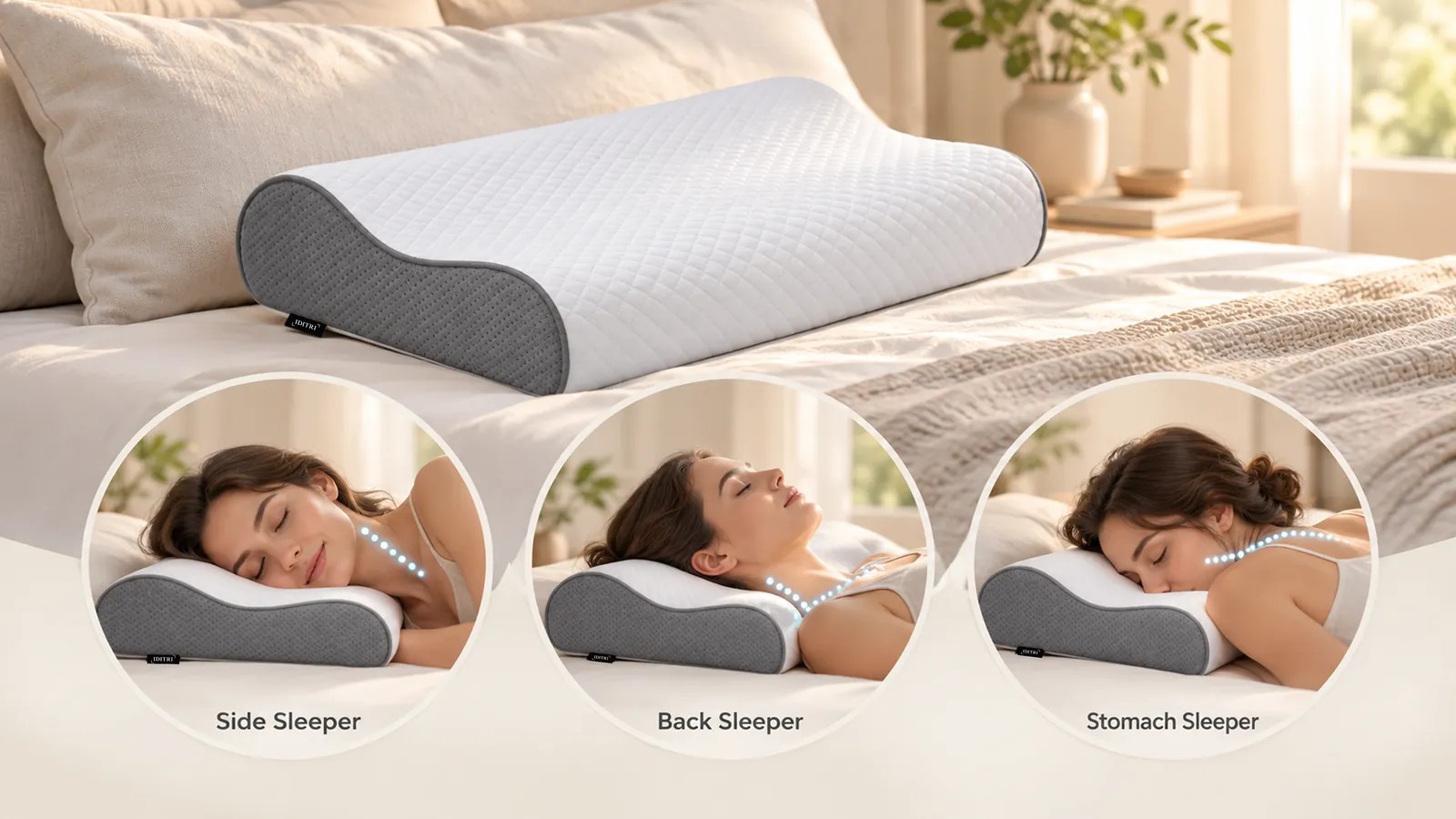
The fix: use one pillow that fits you. A contoured design with a raised edge under the neck and a lower dip for the head does the job of several without the height. If your pillow is so flat that you feel you need a second one, that is a sign to look at replacing it rather than stacking.
Check that your head, neck and shoulders look like one relaxed line when you lie down, as seen from the side.
Habit 3: Reading propped up against the headboard
Hard headboards and soft pillows make for a slumped, rounded position, with the head pushed forward and the shoulders collapsed.
The fix: sit up properly with the lower back supported, hold the book at eye level, and move to a flat position as soon as your eyes grow heavy. Switching your reading to a chair or sofa corner for the first half hour can also work well.
Light stretches before lying down can help your shoulders unwind, though they are only a comfort habit.
A little planning in the evening goes a long way towards a calmer neck in the morning.
Habit 4: Falling asleep on the sofa
Sofa arms are rarely the right height for a head, and the twist from watching a screen sideways can leave you stiff by morning.
Quick fix: If you doze off on the sofa, move to bed as soon as you wake, rather than sleeping on until the morning.
If you often fall asleep there, try setting a gentle alarm, or add a proper pillow to the sofa instead of using the arm.
Habit 5: Switching positions without a plan
Many of us start the night on one side, roll onto the stomach, then back again. Stomach sleeping in particular keeps the head turned for long stretches, which asks the neck to hold a twist for hours.
The fix: try a pre-sleep routine that helps you settle on your side or back. A few steps can help:
- Roll your shoulders and gently stretch the neck before lying down.
- Place the pillow so the raised edge sits under your neck.
- Keep your chin neutral, neither lifted nor tucked.
- Let your shoulder rest beside the pillow, not on it.
A pillow that works with your routine
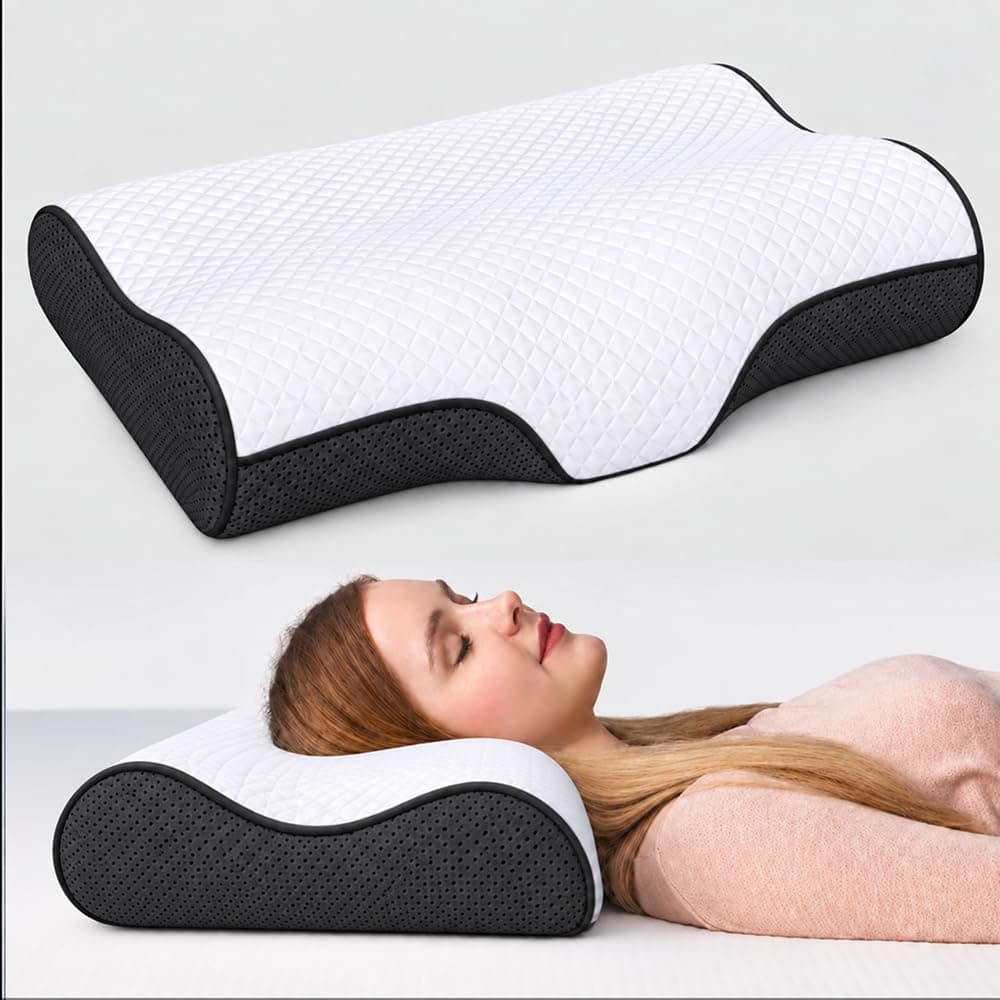
The IDITRI Contour Memory Foam Pillow in Ash Black has a raised edge under the neck, a lower centre for the head and a dense, medium-feel foam that eases gently and then holds. Its quilted spandex cover unzips for washing as its care label directs.
Features worth comparing include:
- A raised edge under the neck
- A lower centre for the head
- A cover that unzips for washing
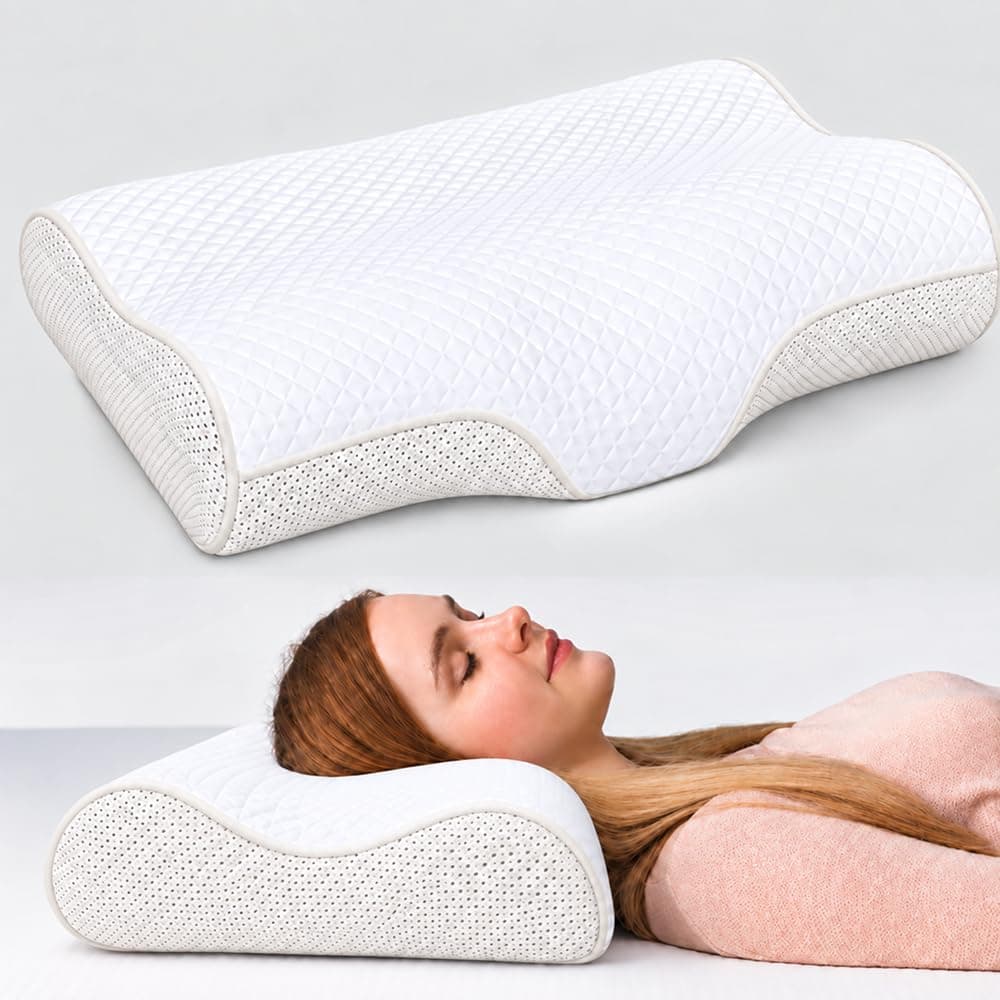
If you prefer a lighter shade, the Milk White orthopedic pillow has a zip-off washable cover too. Browse our contour pillows and cervical pillows to compare. A pillow supports comfortable sleep but is not a treatment.
Whatever you choose, keep an eye on how your neck feels across a fortnight. Small, steady changes to your evening routine usually matter more than any single purchase.