Waking Up With Neck and Shoulder Tightness? Check Your Pillow Shape
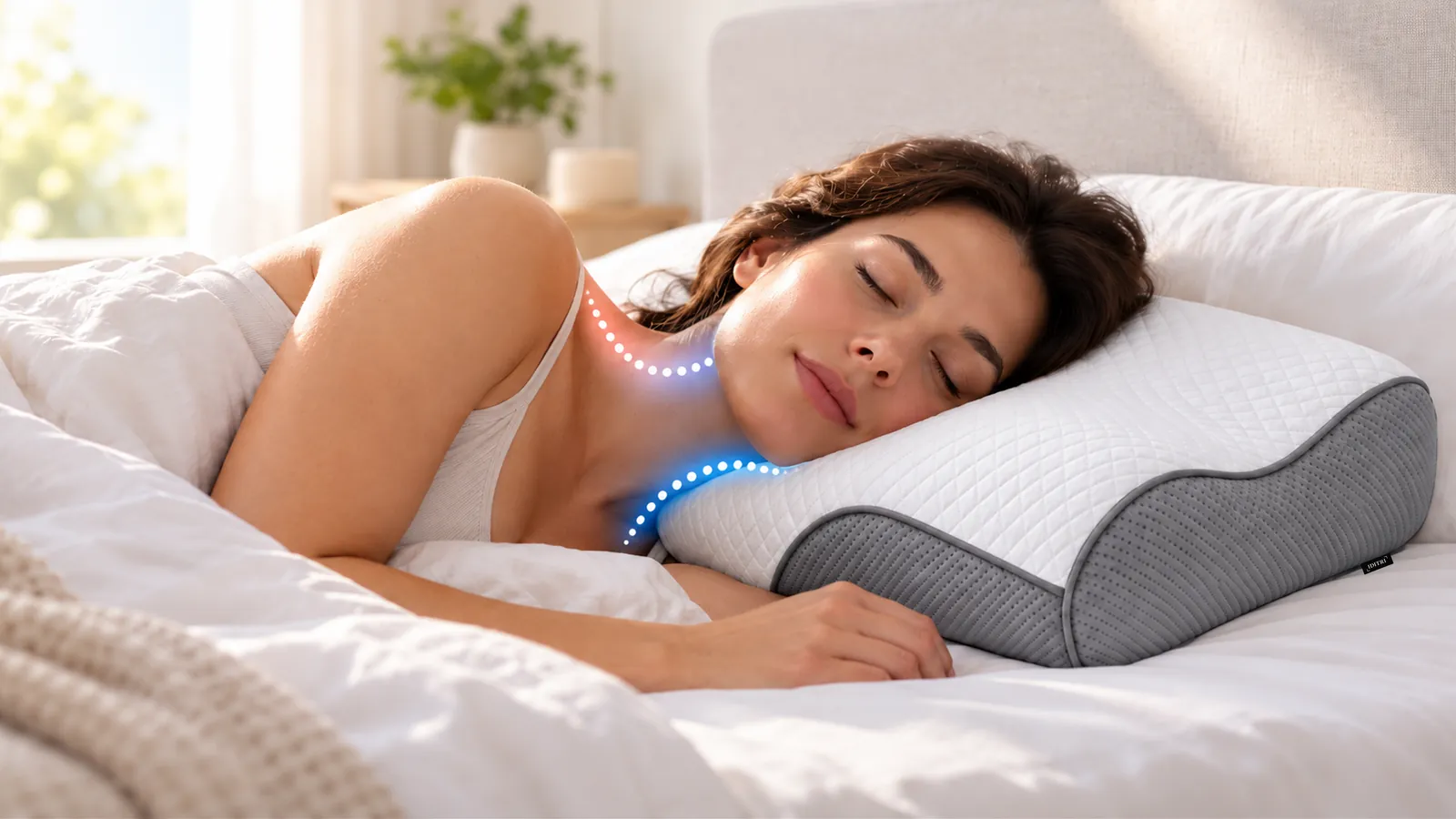
A tight neck and shoulders first thing in the morning often trace back to the pillow. Learn how a contoured shape supports side and back sleepers, and what to look for before you buy.
A stiff neck in the morning often starts the night before.
You go to bed feeling fine and wake up with a tight neck, sore shoulders and the sense that you did not quite rest. It is easy to blame a long day at the desk or a bad mattress, but the pillow under your head is often part of the story. It is the one thing that holds your head and neck in position for six to eight hours.
This article explains how pillow shape affects the neck and shoulders, and how a contoured memory foam pillow can help you stay comfortably aligned. It is general wellness guidance and not a substitute for personalised medical advice.
Why your neck and shoulders work as a team
The muscles that hold your head up also connect into your shoulders. When your head rests at an awkward angle, those muscles keep working to stabilise it, even while you sleep. Over several hours, that low-level effort can leave the whole area feeling tight, and the tension often shows up around the base of the neck and the tops of the shoulders.
A pillow that is too flat lets the head drop. One that is too tall pushes it forward. Either way, the neck is bent away from its natural position, and your muscles are left to make up the difference.
Because the neck and shoulders share so many muscles, discomfort in one area often shows up in the other. That is why choosing a pillow that supports the neck can also make your shoulders feel more relaxed when you wake.
How a contoured shape helps
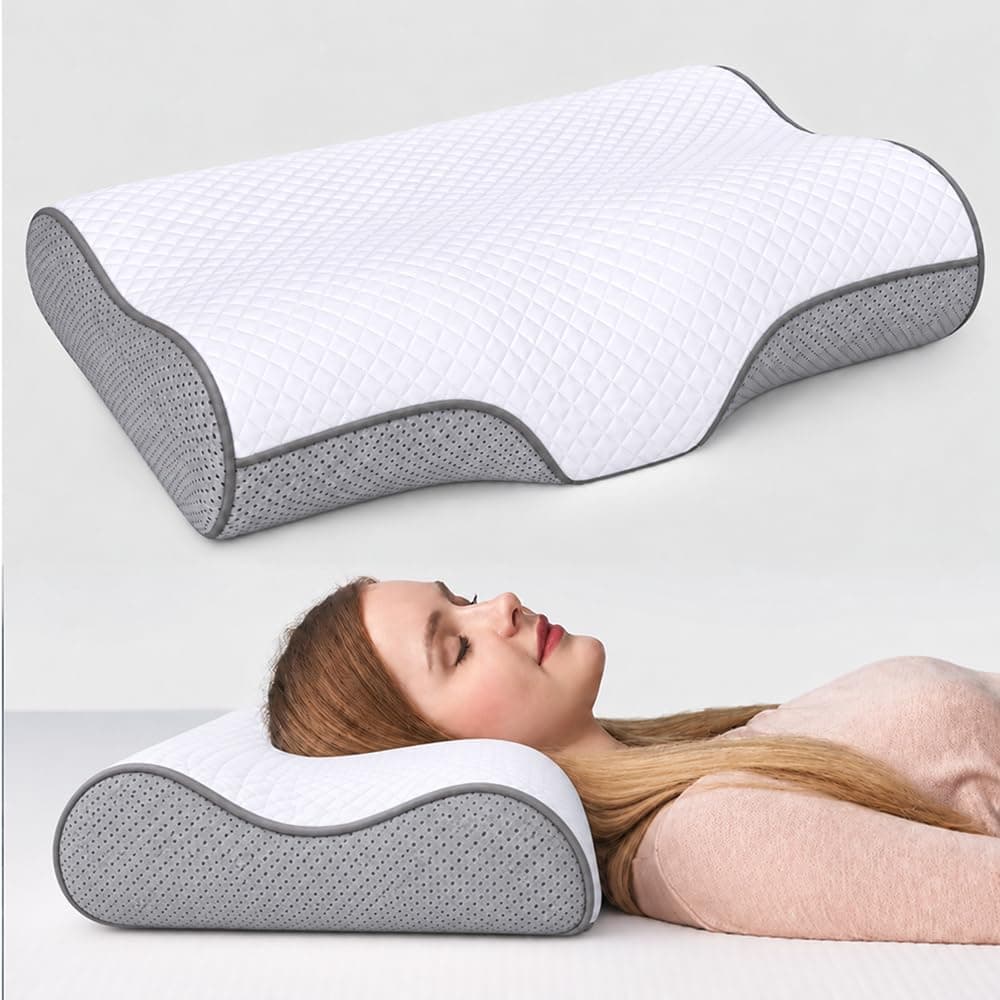
A contour pillow is built with two different zones. A raised edge supports the neck, and a lower, gently hollowed area lets the head settle without being pushed up or forward.
The idea in one line: support the neck where it needs support, and let the head rest where it naturally sits.
Memory foam adds a second benefit. It adapts to the shape of your head and neck and then holds that support through the night, so the pillow does not flatten after a few weeks of use. The result is a steadier, more consistent sleeping position from bedtime to morning.
Side and back sleepers: getting the position right
The right position depends on how you sleep:
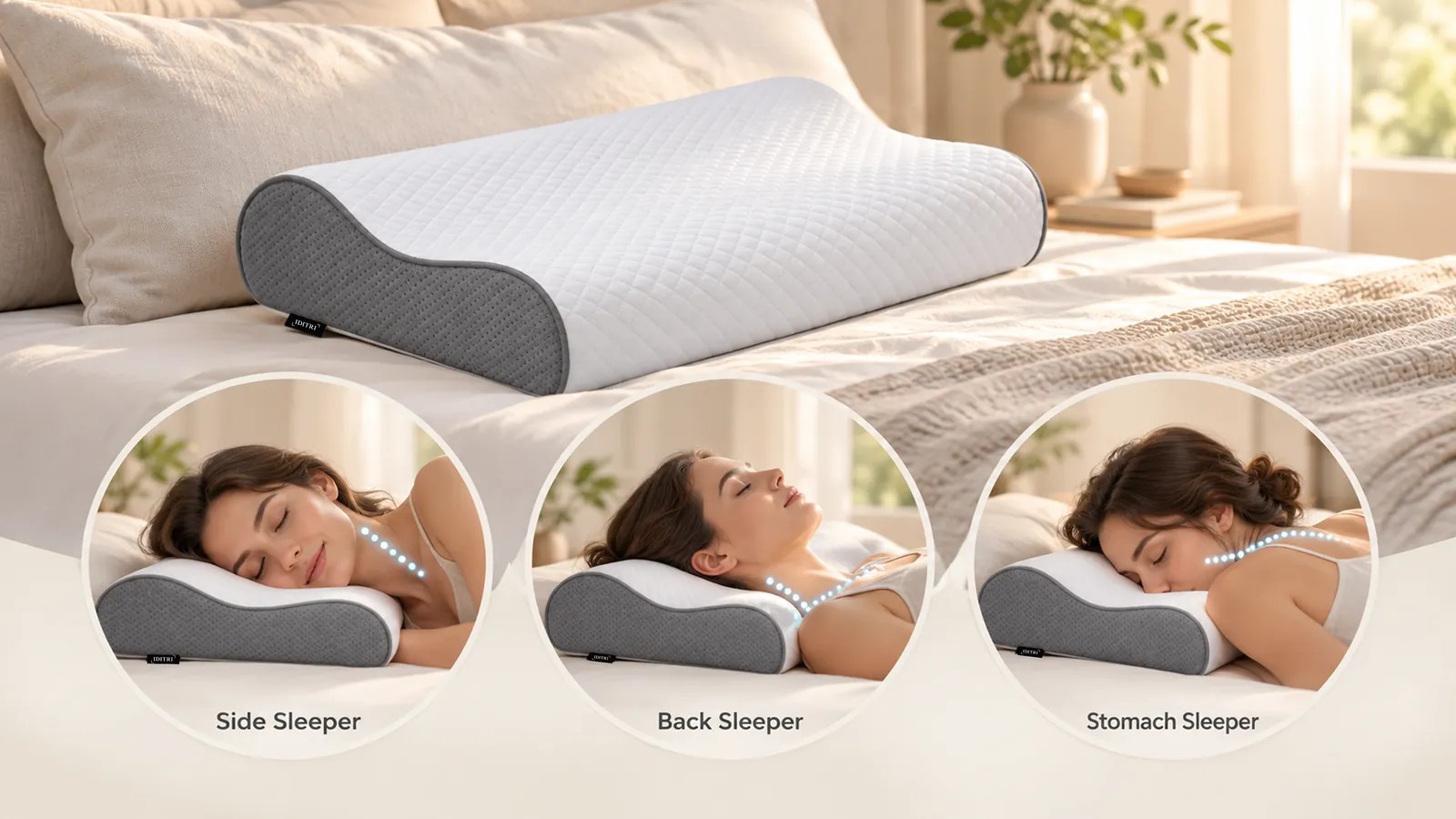
- Side sleepers: the contour fills the space between your ear and the mattress, keeping your head level with your spine. Rest your shoulder beside the pillow, not on top of it.
- Back sleepers: place the raised curve under your neck and let your head rest in the lower zone.
Your chin should stay roughly level, neither pointing at the ceiling nor tucked toward your chest. One supportive pillow is usually better than a stack of several.
Where the IDITRI Contour Pillow fits
The IDITRI Contour Pillow for Neck & Shoulder Pain in Dove Grey is designed for exactly this kind of support. It is made from ergonomic memory foam in a contoured shape that suits side and back sleepers, and it measures 19 x 12 x 4 inches, a practical size for most beds. The cover is removable and washable, which makes it easy to keep fresh.
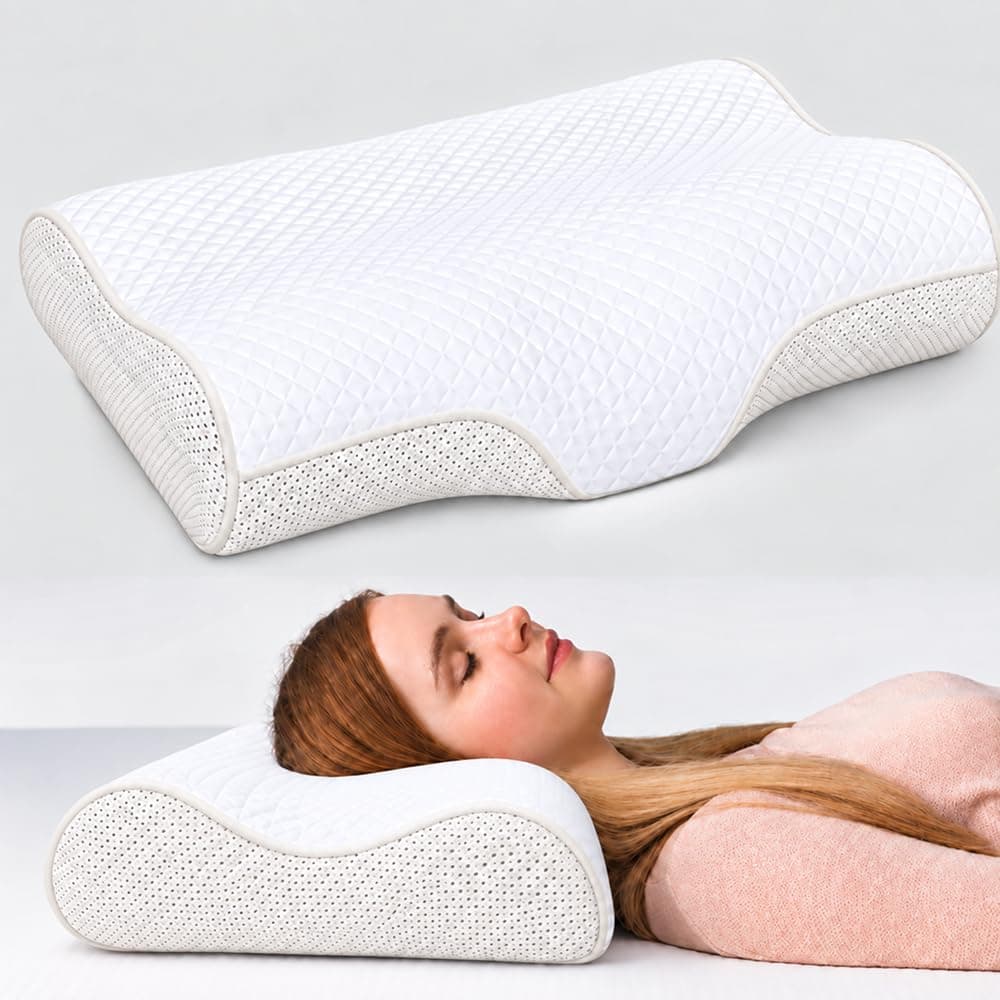
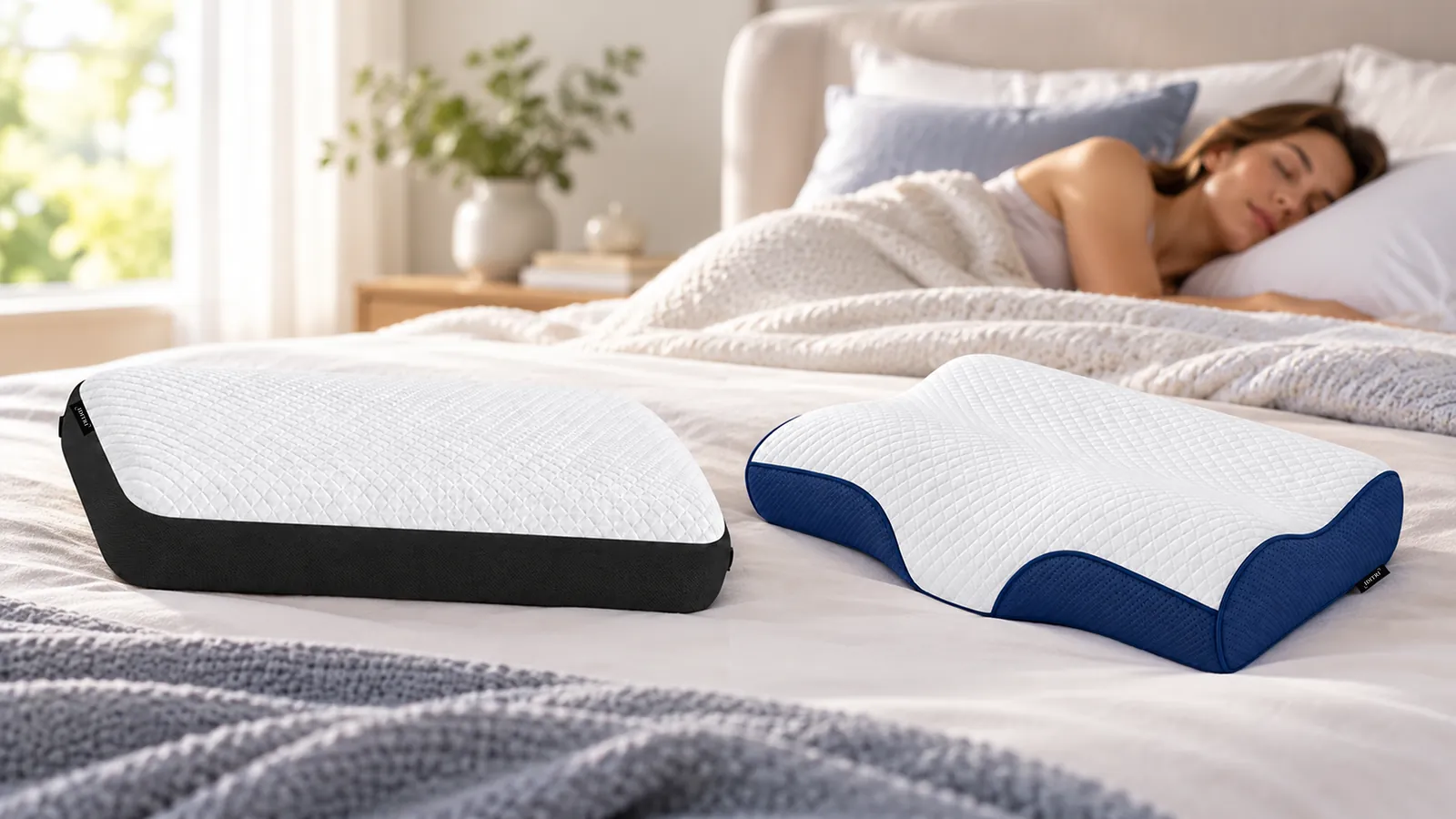
If you like a softer, sink-in feel, the Orthopedic Memory Foam Pillow in Milk White uses a similar contour with a gentler foam and a zip-off cover. You can compare every shape and colour on our contour pillows page, or look at the cervical pillows if you want a design for side, back and stomach sleepers.
Small habits that help your pillow work harder
A good pillow works best alongside good habits. A few to try:
- Take short breaks from your screen and roll your shoulders back
- Avoid reading or watching television with your head propped at a steep angle
- Do a few slow neck and shoulder stretches before bed
Give any new pillow a week or two to feel natural. A contoured shape can feel different at first, and your body needs a little time to adjust.
When to seek advice
If tightness is severe, keeps returning, or comes with numbness, tingling or pain that spreads into your arms, please speak to a qualified healthcare professional. A supportive pillow can make sleep more comfortable, but it is not a treatment, and persistent symptoms deserve proper care.