Desk Posture and Your Pillow: Easing Neck Strain Day and Night
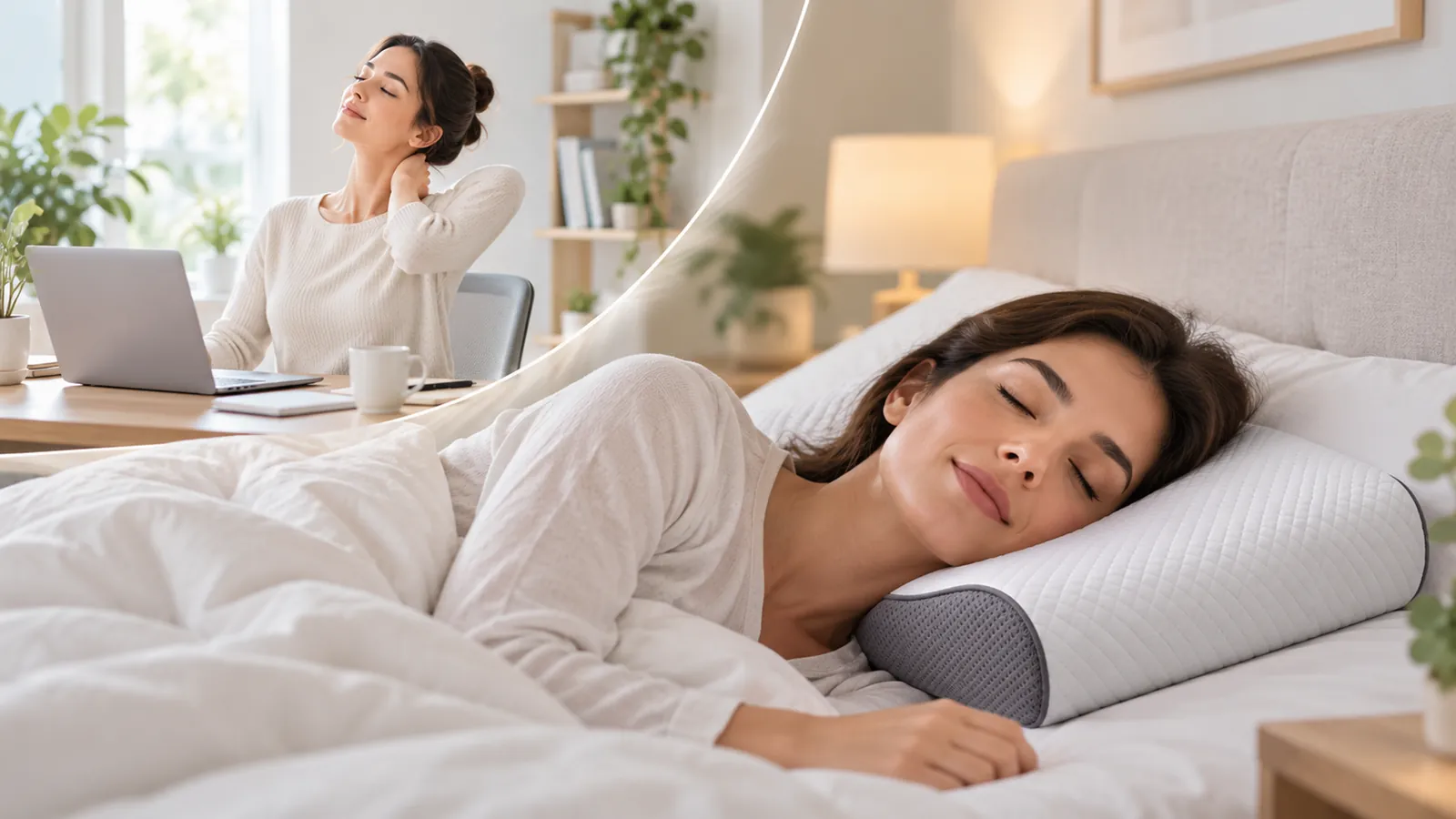
Long hours at a screen and a poorly supported night can add up to a tired neck. Here are simple desk stretches and pillow tips for caring for your neck around the clock.
Your neck works all day, so it deserves support all night.
If you spend your working hours at a desk, your head spends a lot of time pushed slightly forward toward the screen. A head weighs several kilos, and holding it forward asks the muscles of the neck and upper back to work harder than they would in a relaxed upright position.
By evening those muscles can feel tired, and a pillow that does not support the neck can keep the strain going overnight. This guide covers both halves of the day. It is general wellness guidance and not a substitute for personalised medical advice.
What desk posture does to your neck
Leaning toward a laptop, cradling a phone, or looking down at papers all move the head forward of the shoulders. The further forward it goes, the more the back of the neck has to hold it up.
Common signs include a heavy feeling at the base of the skull, tight shoulders, and a stiff neck when you first stand up. Small, regular changes matter more than one big fix, which is why short breaks and a comfortable setup work so well.
Set up your desk to help
You do not need new furniture to improve things. A few adjustments are often enough:
- Raise your screen so the top sits around eye level
- Keep your screen about an arm's length away
- Rest your forearms on the desk with relaxed shoulders
- Place your feet flat on the floor and sit back in your chair
- Use a headset instead of tucking the phone against your shoulder
Then add movement. Standing, walking to refill a glass of water, or simply looking out of a window every half hour breaks up long periods in one position.
Five desk stretches to try between tasks
These gentle moves take only a couple of minutes. Go slowly, breathe normally, and stop if anything hurts:
- Chin tucks: sit tall, glide your chin straight back as if making a double chin, hold for five seconds, and repeat five times.
- Side neck stretch: tilt your ear toward your shoulder, hold for 15 seconds, then switch sides.
- Shoulder rolls: roll both shoulders backward in slow circles, ten times.
- Upper back opener: clasp your hands in front, round gently through the upper back, and hold for ten seconds.
- Doorway chest stretch: place your forearm on a door frame, step through softly, and hold for 15 seconds each side.
Treat these as gentle movements, never forced stretches.
What your pillow can do overnight
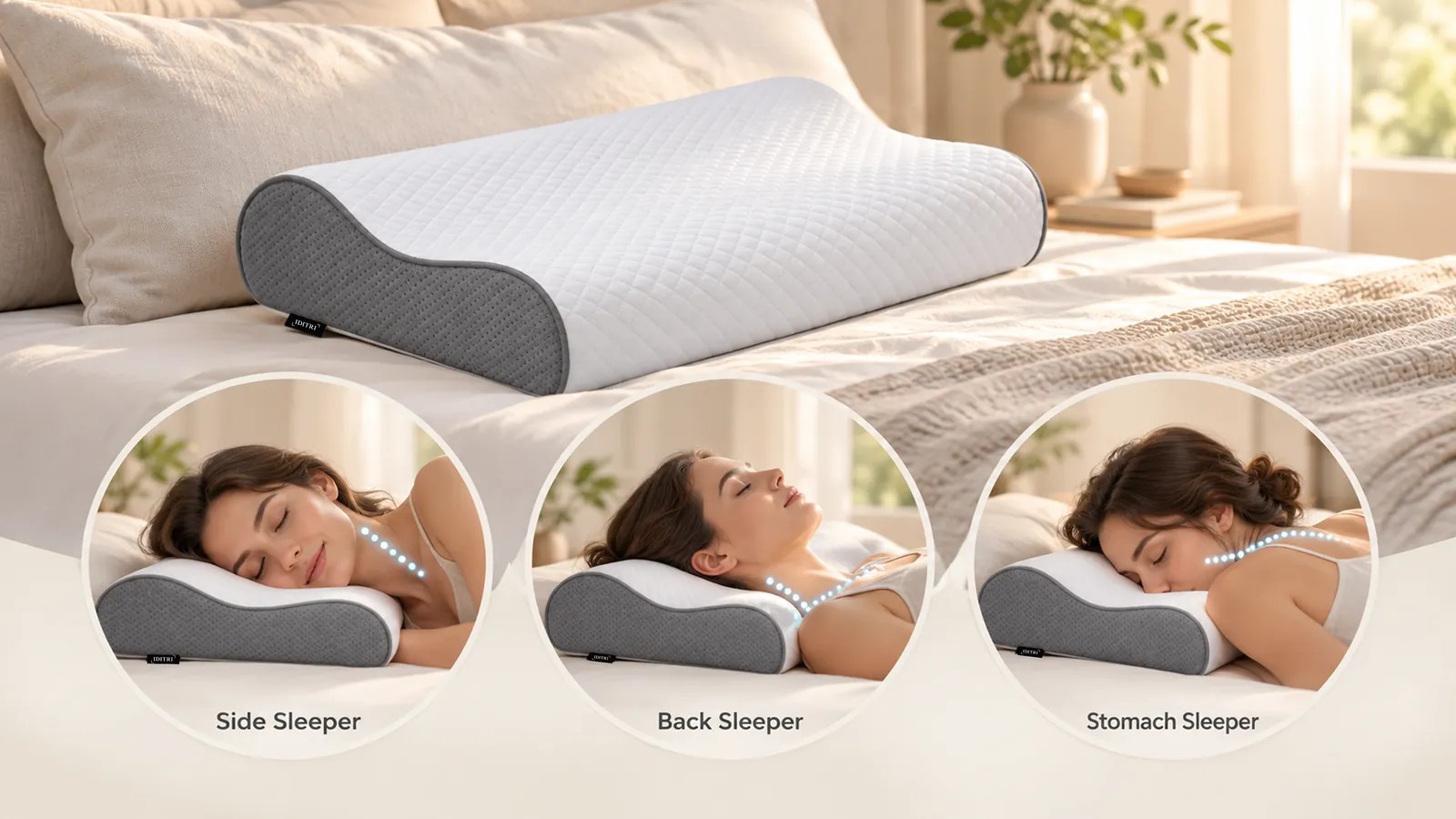
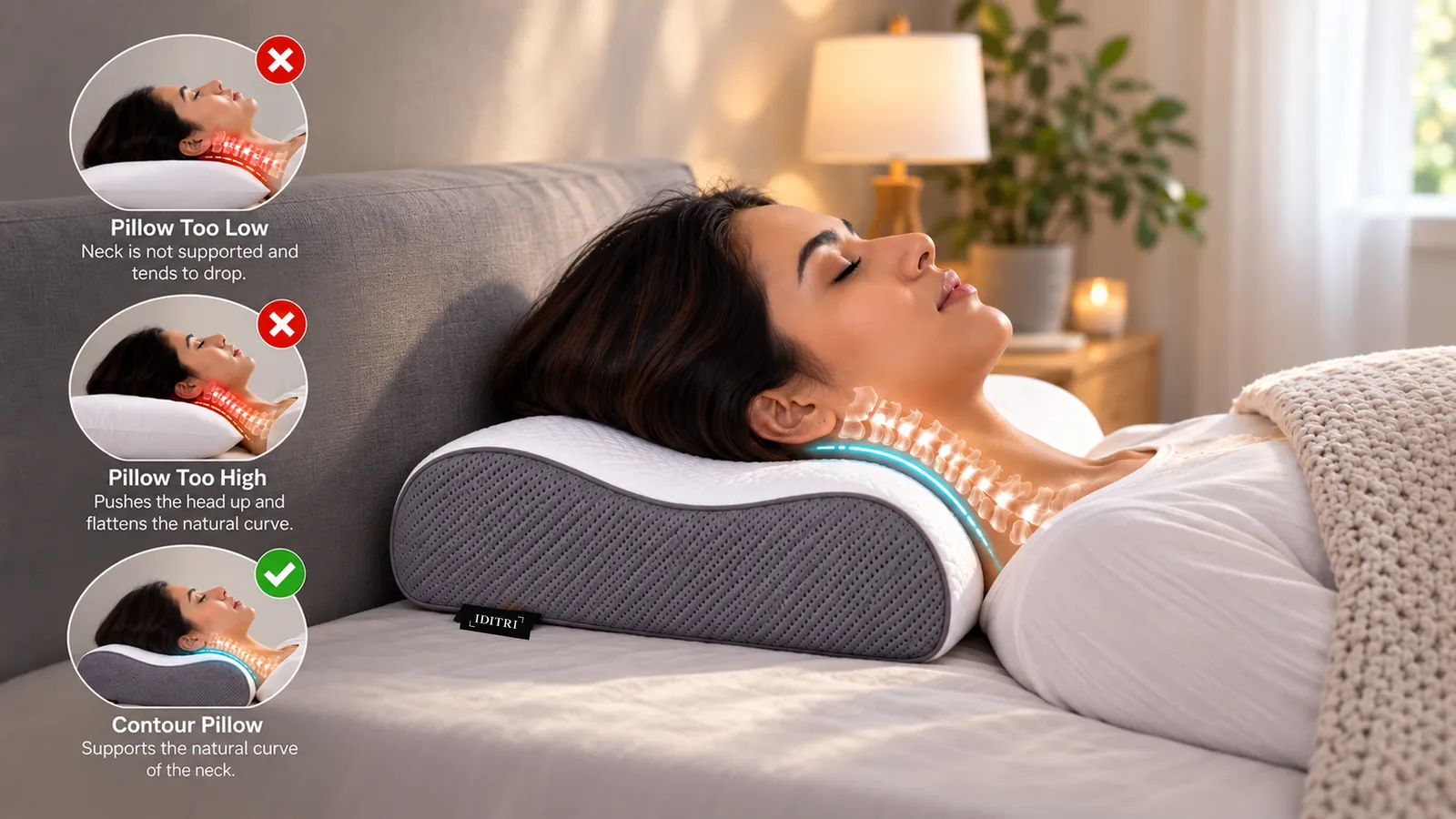
A pillow that is too flat or too high leaves the neck bent for hours. A contoured memory foam pillow is designed to support the natural curve of the neck, helping the head, neck and shoulders rest in a more relaxed line.
That does not replace good habits during the day. Think of it as the other half of the routine, giving your neck a comfortable place to rest after a long day of holding itself up.
Aim for consistency. A few minutes of stretching, a sensible desk setup and a supportive pillow each add a little comfort, and together they are easier to keep up than any single dramatic change.
Where the IDITRI Cervical Pillow fits
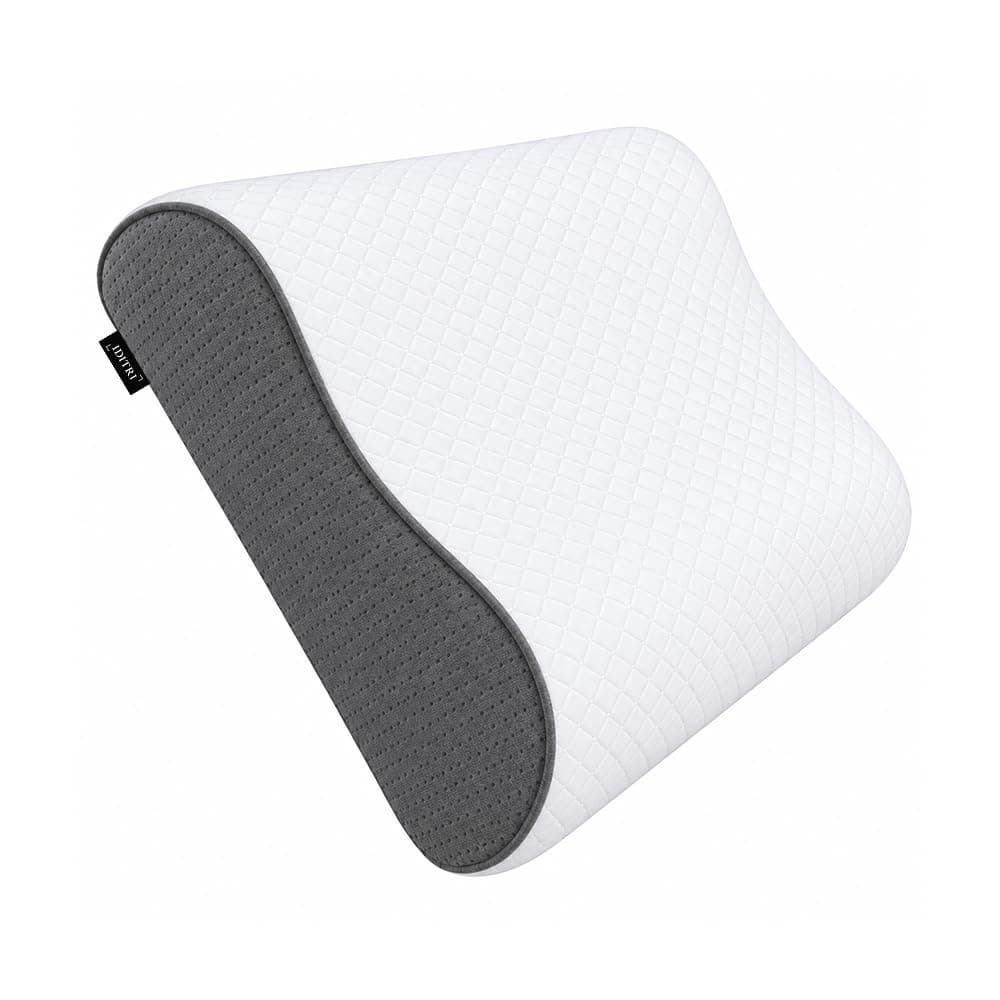
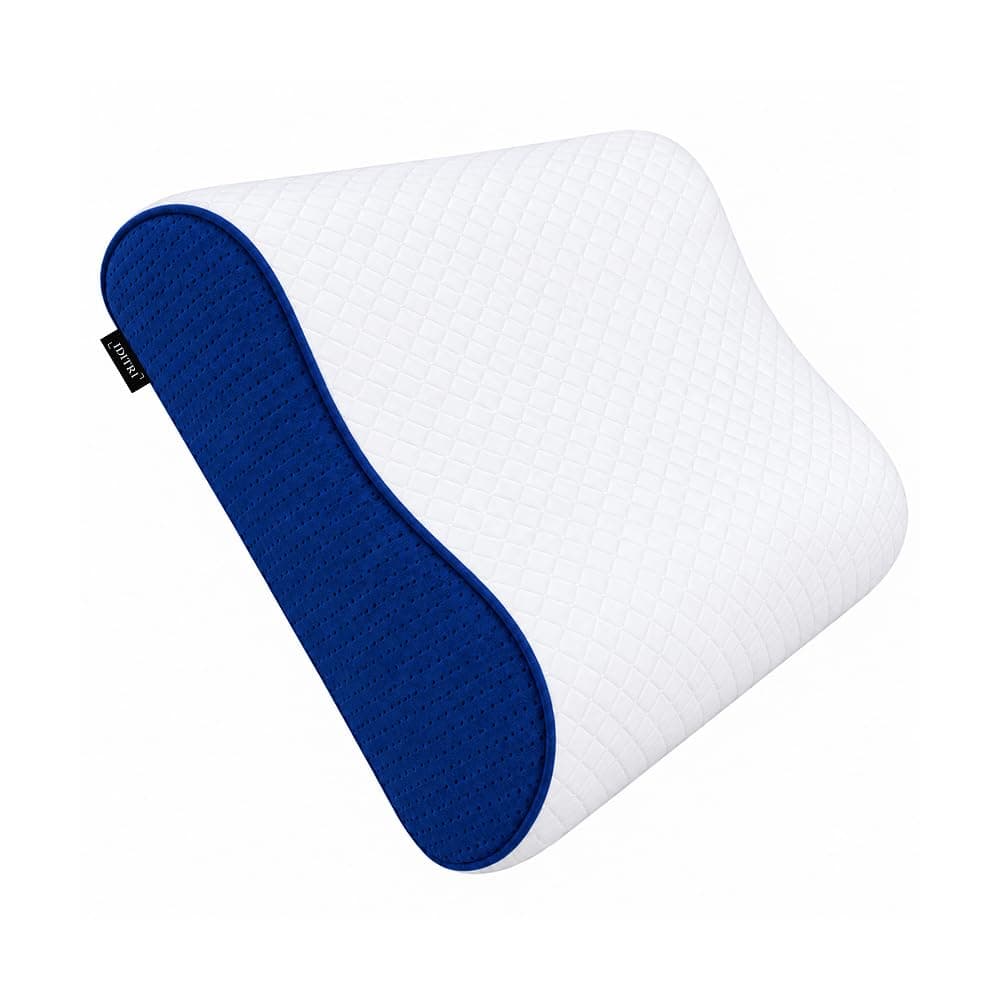
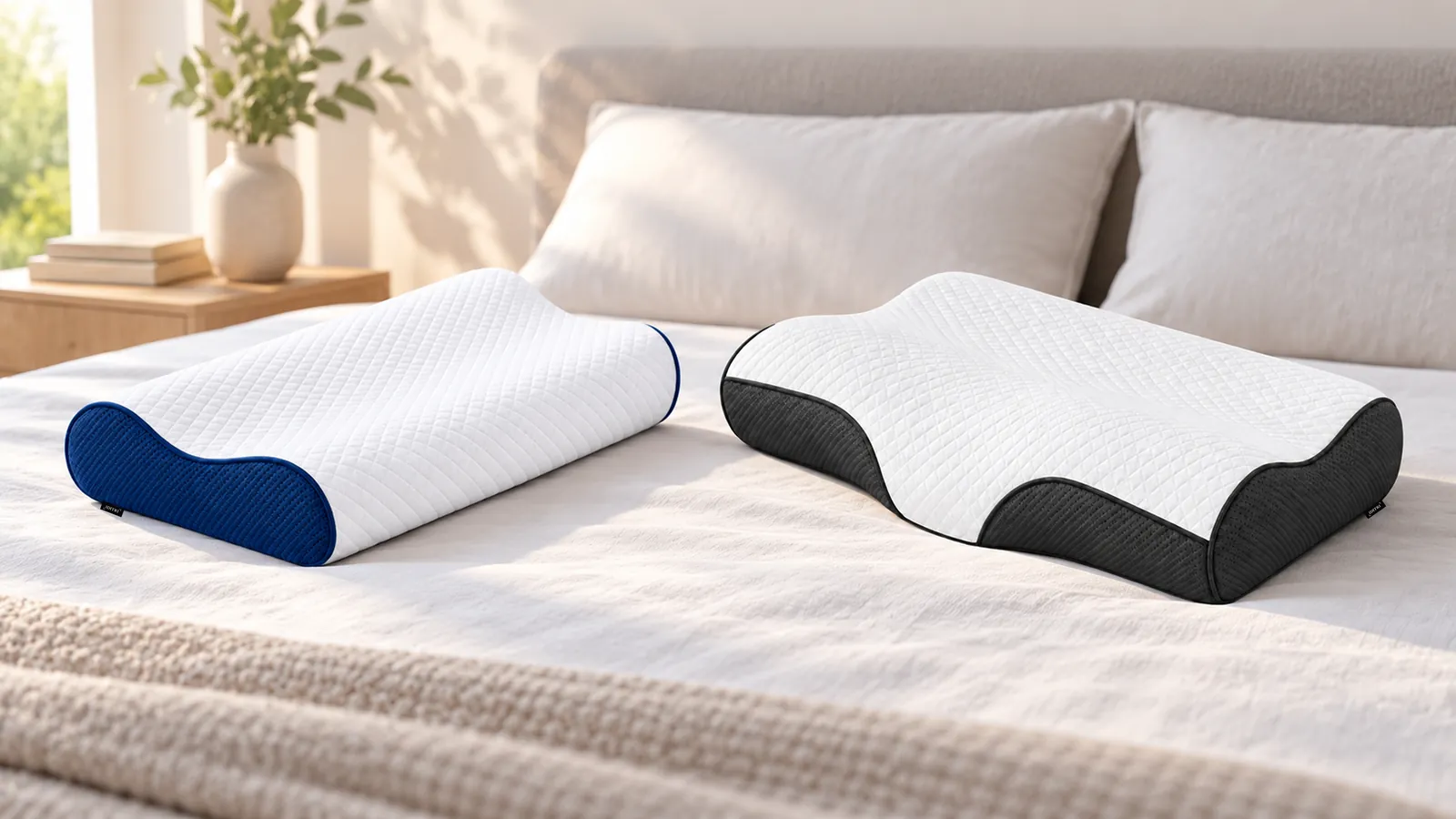
The IDITRI Cervical Pillow for Neck Support in Dove Grey is made from high-density memory foam that adapts to the shape of your head, neck and shoulders. It has a dual-height contour profile, so you can choose the support level that suits your sleeping position, and a wave shape designed not to feel overly restrictive.
It measures 24 x 14 x 4 inches, suits side and back sleepers, and includes a soft removable cover for easy cleaning. Prefer a deeper tone? The Navy Blue version offers the same design. You can explore more shapes on our cervical pillows page, or see more sculpted options in our contour pillows collection.
A simple evening wind-down
Before bed, give your neck a few minutes of attention. Roll your shoulders, repeat a gentle side neck stretch, and step away from screens for a while. Then settle in with the pillow positioned so the raised curve supports your neck.
Remember: a comfortable pillow and good desk habits can help, but they are not a treatment. If you have ongoing neck pain, numbness, tingling or headaches, please speak to a qualified healthcare professional.