Looking Down All Day? How 'Text Neck' Habits Affect Your Evenings

Hours spent looking down at a phone or laptop can leave your neck feeling tired by evening. Learn simple posture habits, gentle stretches and how a supportive pillow fits into the day.
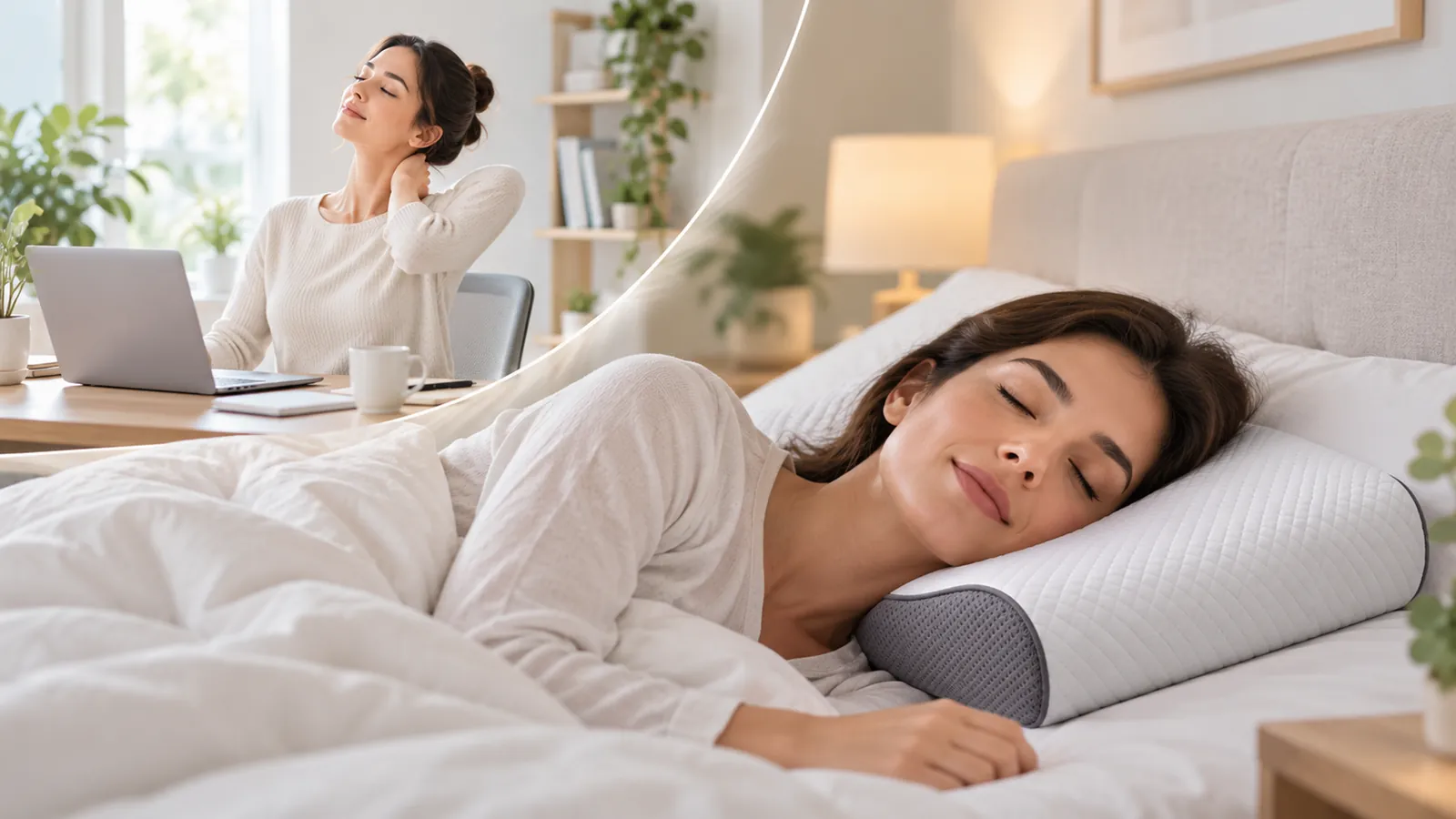
Looking down all day can leave your neck tired by evening.
Phones, laptops and tablets have quietly changed how we hold our heads. Many of us spend hours with the chin dropped and the head pushed forward, a habit often nicknamed text neck. By evening, the neck and shoulders can feel tired and tight.
This article looks at why that happens and what simple habits may help. It is general wellness guidance and is not a substitute for personalised medical advice.
Why the head feels heavy
Your head is heavier than most people expect. When it sits directly above your shoulders, the neck carries that weight comfortably. When it tips forward to look at a screen, the muscles at the back of the neck work harder to hold it up.
Do that for hours and the muscles can feel fatigued by the end of the day. Nothing dramatic has happened; the same few muscles have simply been on duty without a break. Add a slouched chair, a phone held low on the sofa and a long commute, and the neck can spend most of the day in a forward position.
Fix the setup before the stretch
The easiest gains come from where you place your screens. Try these adjustments:
- Raise your laptop or monitor so the top of the screen is at eye level
- Hold your phone higher, closer to your face, instead of dropping your head
- Keep your elbows close to your body and your forearms supported
- Sit with your back against the chair and your feet flat on the floor
You do not need special equipment for most of this. A stack of books under a laptop works perfectly well. If you work on a laptop all day, a separate keyboard makes it much easier to raise the screen without lifting your arms. Small changes to your setup are far easier to keep than strict rules about posture.
Little breaks, big difference
Set a reminder every thirty to forty-five minutes. When it goes off, look away from your screen, roll your shoulders back a few times and stand up for a moment. The point is to change position often, not to hold a perfect one.
Try this: gently draw your chin straight back, as if making a double chin, hold for a few seconds and release. Repeat a few times, and stop if anything feels uncomfortable.
Your evening wind-down matters too
The hours after work are a chance to give the neck something different to do. Avoid scrolling in bed with your head propped steeply forward, and let your shoulders drop as you read or watch something.
A warm shower and a few slow neck rolls before bed can help you release the day. Then, the pillow takes over for the next eight hours. It is worth putting the phone down a little earlier too, since the scrolling posture is exactly the one your neck has been holding all day.
Where the IDITRI Cervical Pillow fits
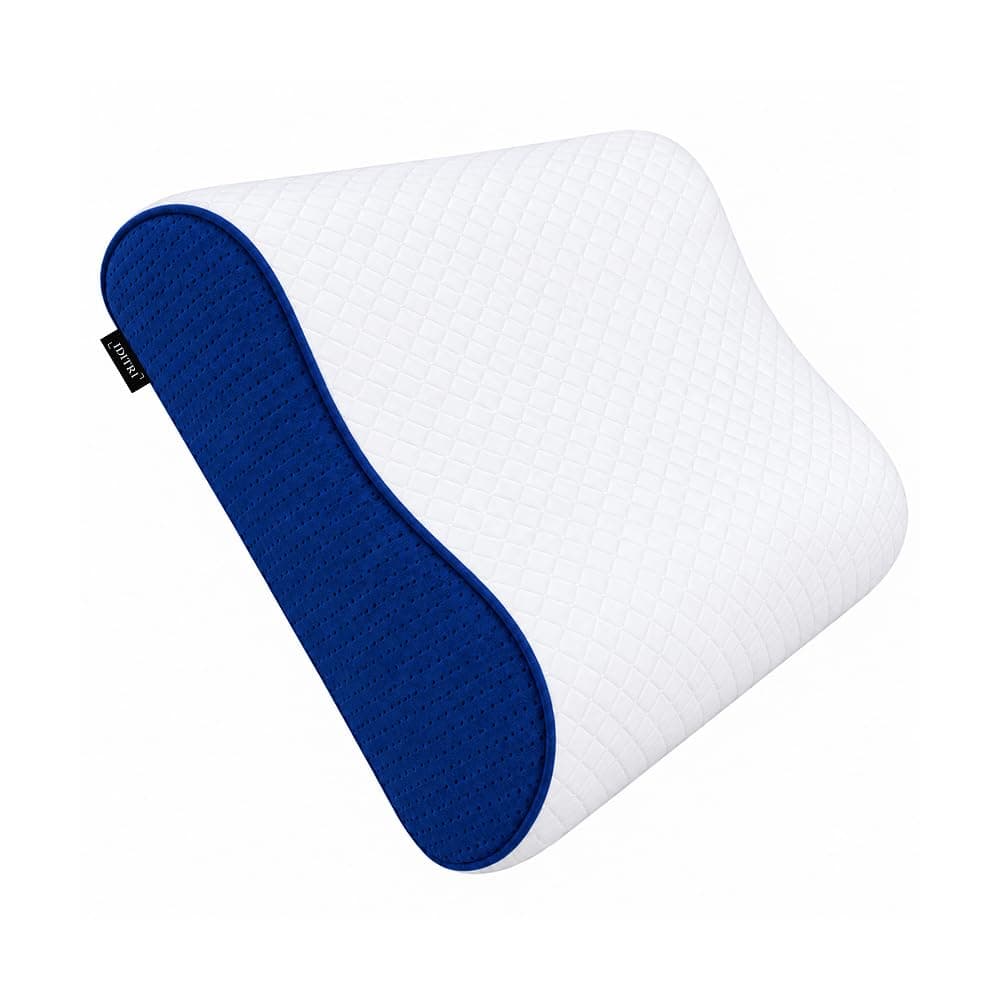
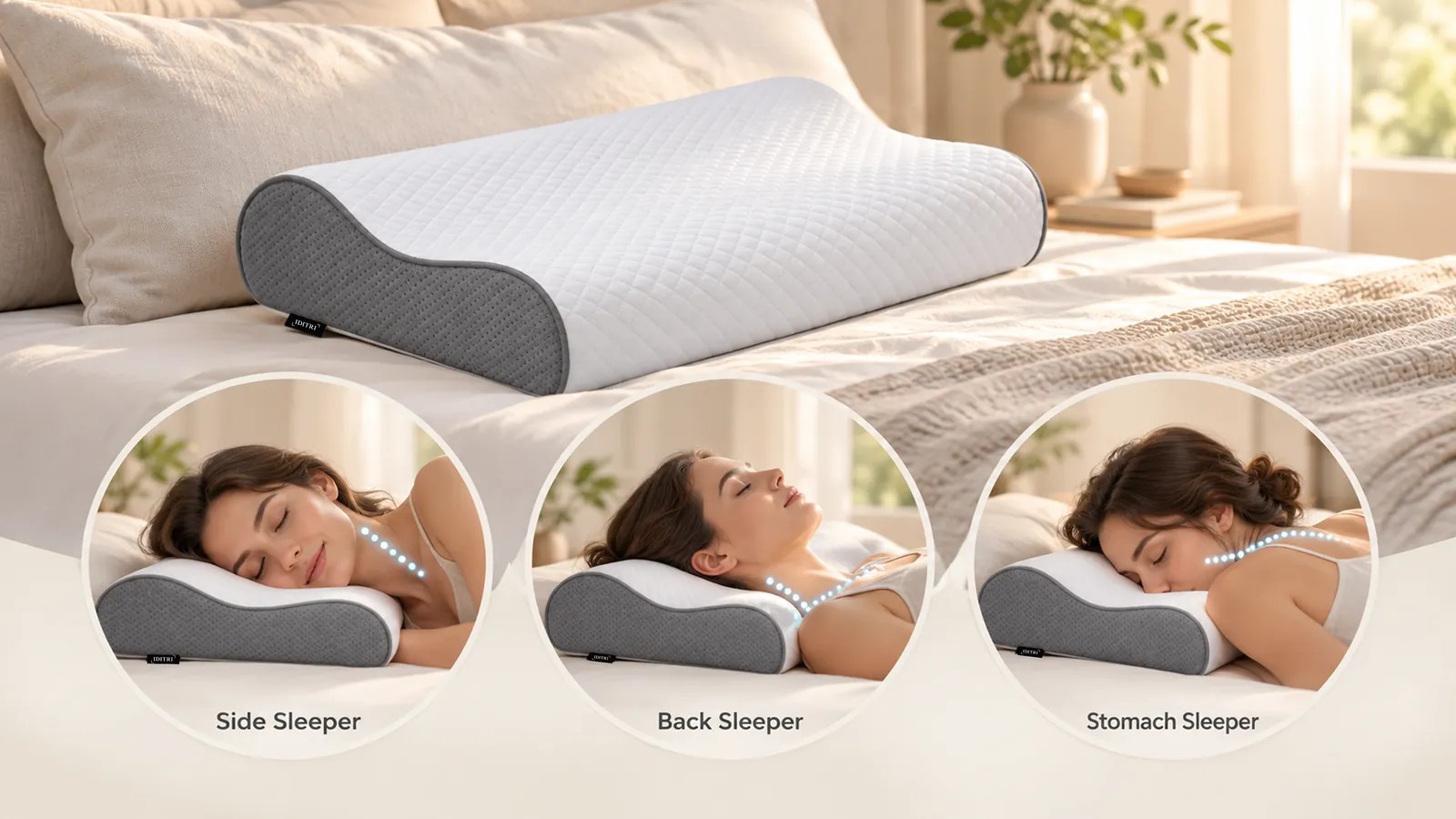
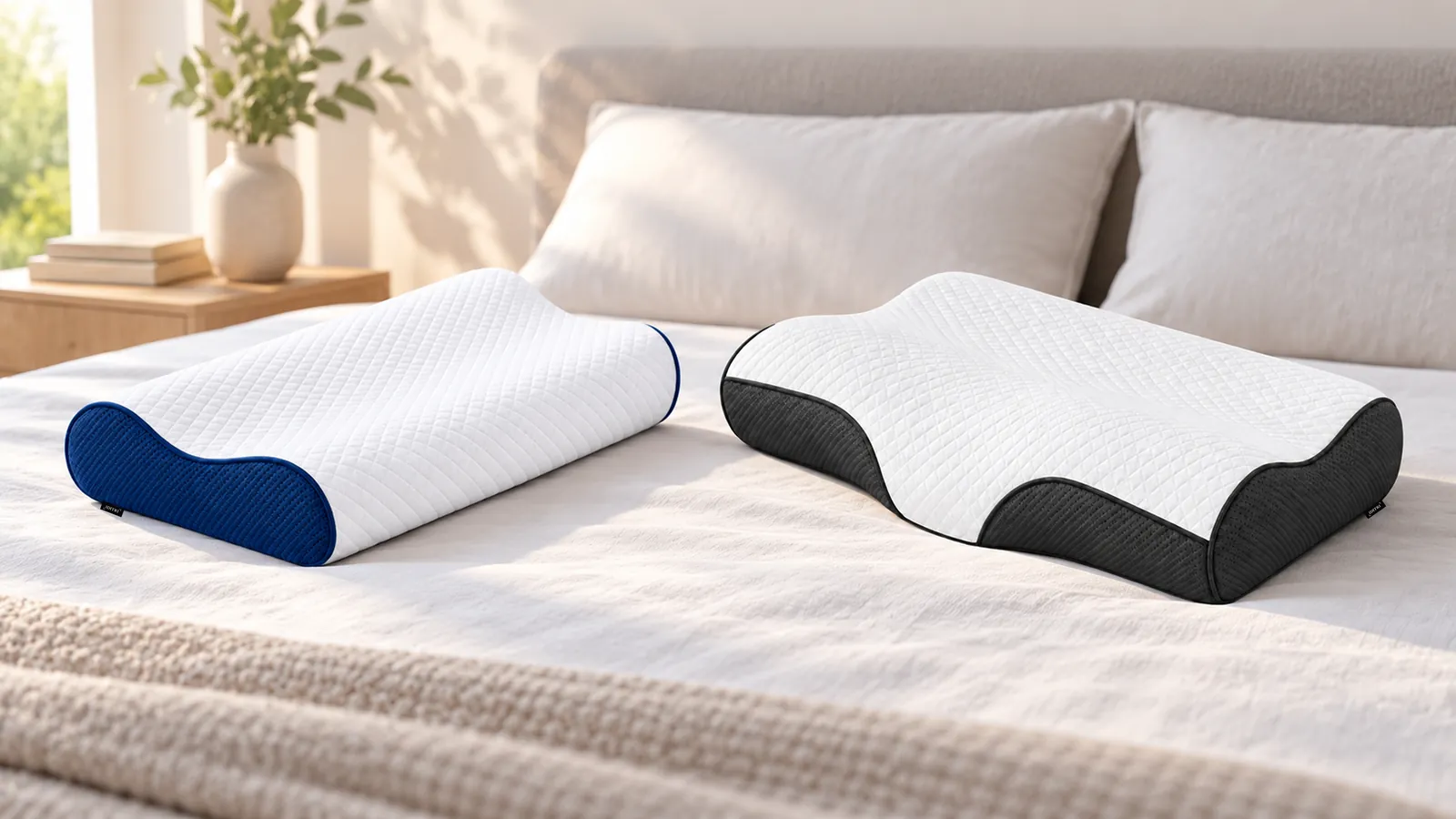
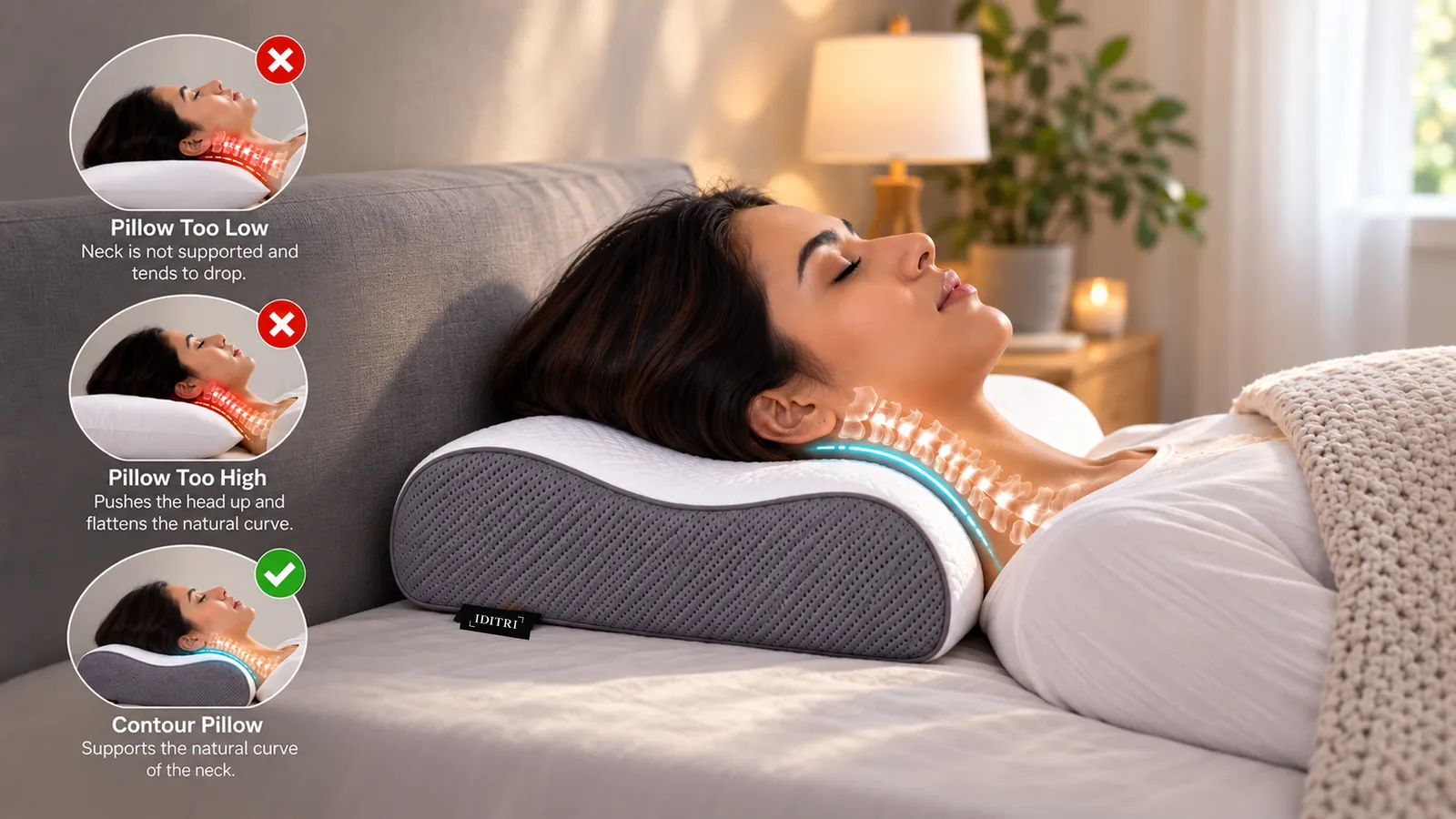
After a day of looking down, your neck deserves a calm, supportive place to rest. The IDITRI Cervical Pillow for Neck Support in Navy Blue is made from high-density memory foam that adapts to the shape of your head, neck and shoulders. Its dual-height contour profile lets you choose a support level for your sleeping position, and the wave profile is designed to feel supportive without being restrictive. It measures 24 x 14 x 4 inches and suits side and back sleepers.
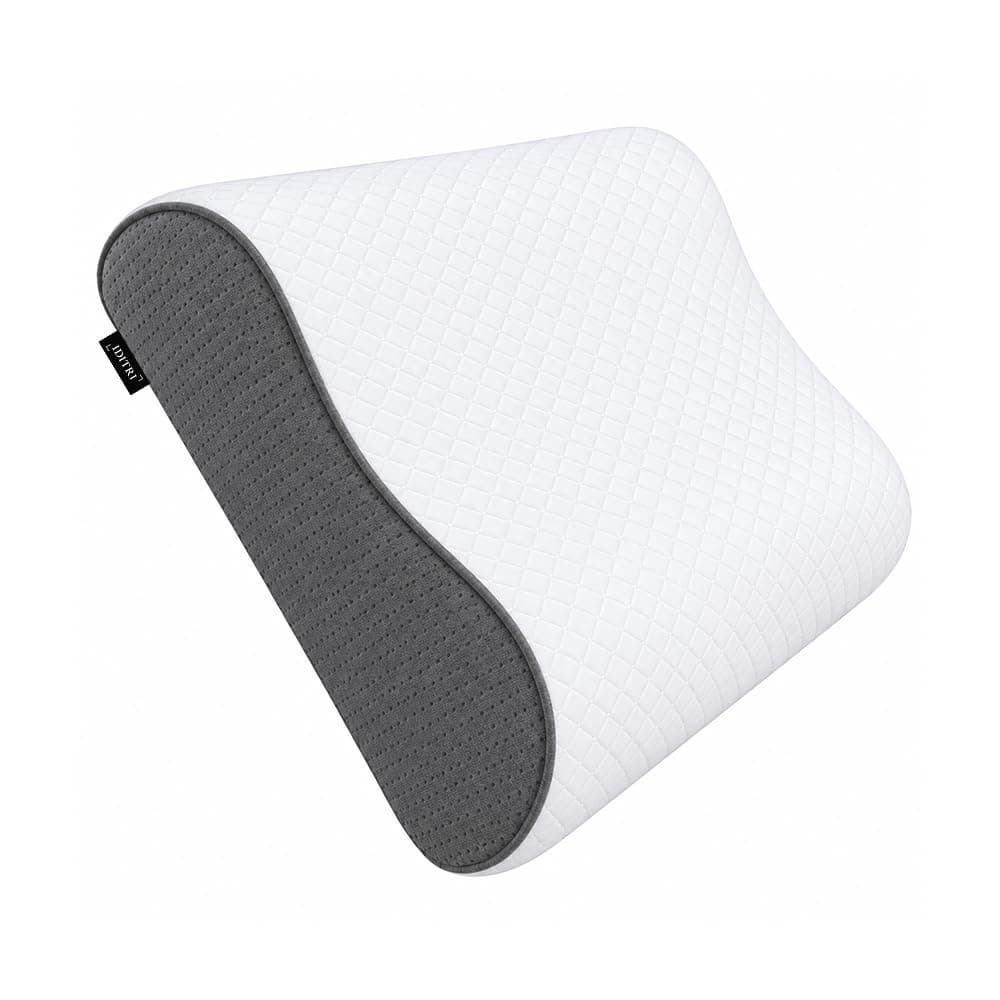
Prefer a softer, quieter tone? The Dove Grey version offers the same ergonomic idea. Explore the full range on our cervical pillows page, or see a more sculpted design in our contour pillows.
Using your pillow well
Choose the contour side that matches how you sleep, keep one supportive pillow rather than a stack, and let the neck rest in line with your spine. The cover is removable, so wash it as per its care label and spot clean the foam only.
Give a new shape a week or two before deciding. Your body needs time to settle in after years on a flatter pillow.
When to seek advice
If neck tightness is severe, keeps returning, or comes with headaches, numbness or tingling in your arms, please speak to a qualified healthcare professional. Better habits and a supportive pillow can make everyday life more comfortable, but they are not a treatment.