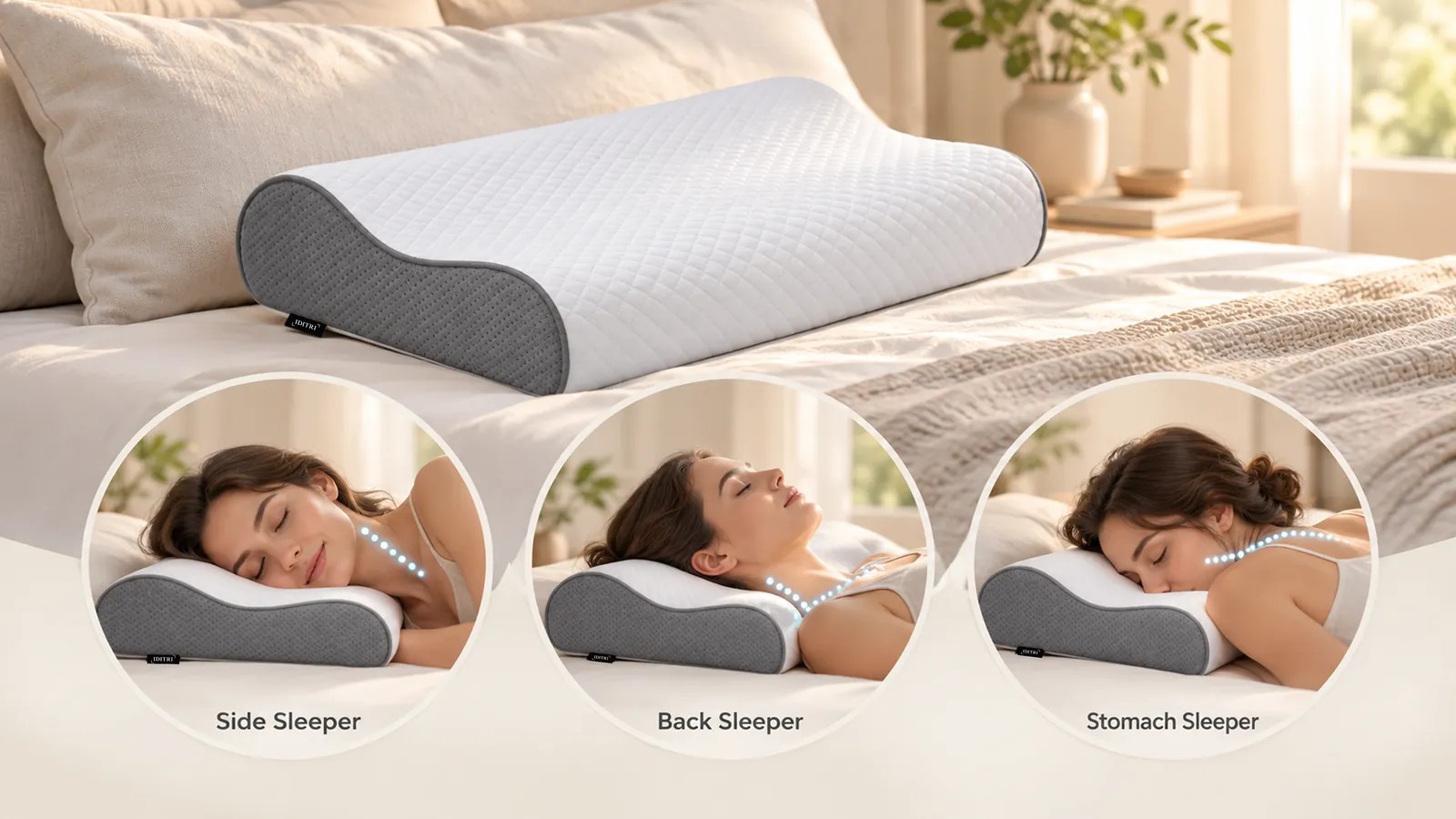
The Natural Curve of Your Neck, Explained Simply
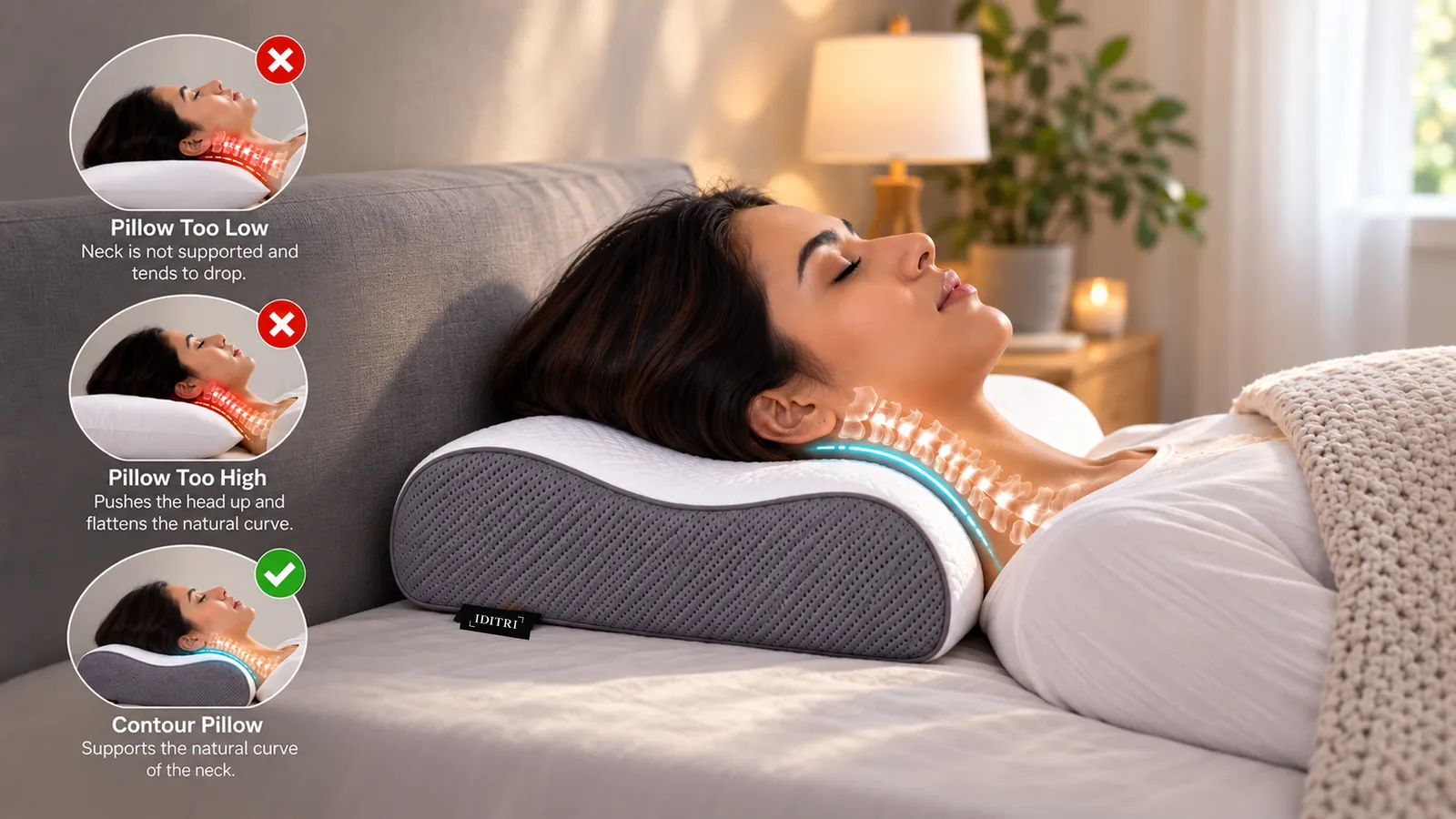
Your neck is not a straight line, and a flat pillow does not know that. Learn what the natural neck curve is, why support under it matters at night, and how a contour fills the space.
Your neck has a shape, and your pillow should respect it.
Look at a person from the side and you will notice that the neck is not a straight post. It bends gently forward in a soft C shape, linking the head to the shoulders. Most of us never think about that curve until we wake up with a stiff neck and wonder why.
This article explains the curve in plain language and shows how pillow shape can work with it. It is general wellness guidance and is not a substitute for personalised medical advice.
What the curve is for
The curve is part of how your upper spine carries the weight of your head, which is heavier than most people expect. A gently curved neck spreads that load across several small joints and muscles instead of concentrating it in one place.
During the day, you keep that curve without noticing. At night, though, your muscles relax, and the position of your head is decided largely by whatever is under it.
The problem with a flat pillow
A flat pillow rests under the head and leaves the space beneath the neck empty. The neck then hangs with nothing underneath it for most of the night, while the muscles around it keep working to hold the head in position.
A very high pillow creates a different problem. It pushes the chin toward the chest and flattens the curve from the other direction. Neither extreme is what your neck is looking for, which is steady support in the right place.
How a contour fills the space
A cervical contour is built in two zones. A raised edge sits under the neck and fills the curve, while a dipped middle lets the back of the head settle in line with it.
The idea in one line: support the neck where it curves, and let the head rest where it naturally sits.
Memory foam suits this shape because it moulds to you with body warmth, then keeps enough body to hold the curve through the night instead of flattening. That balance matters: a surface that is too soft lets the neck sink, while one that is too hard leaves gaps.
Where the IDITRI Cervical Memory Foam Pillow fits
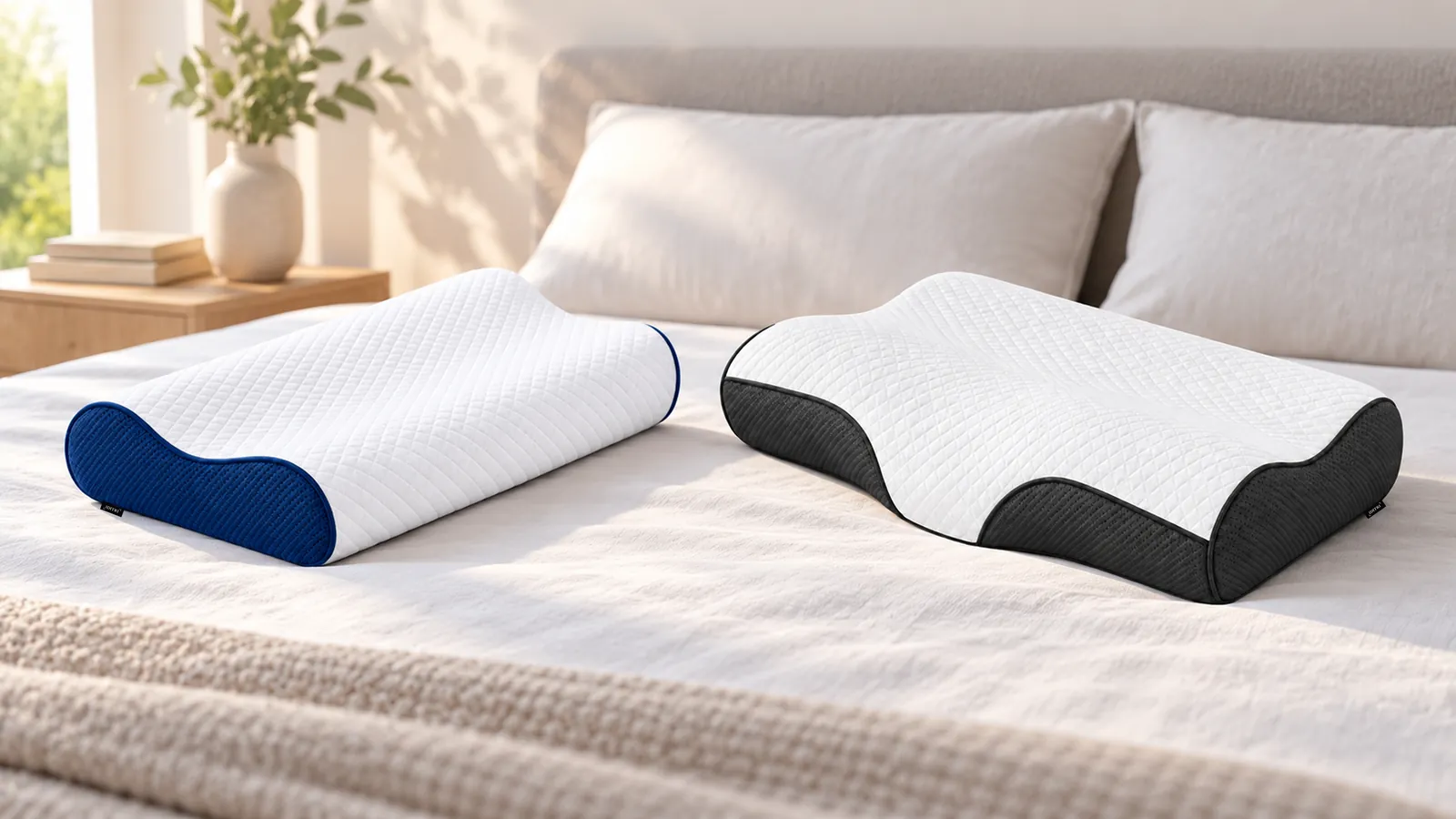
The IDITRI Cervical Memory Foam Pillow in Ash Black is built around this idea. Here is what stands out:
- A raised edge that rests in the space under the neck
- A dipped head zone that gives the back of the head a place to settle
- Medium-feel memory foam that responds to body warmth yet keeps its shape
- 19 x 12 x 4 inches, with a spandex cover that unzips for washing as per its care label
If you mostly sleep on your side, the Side Sleeper Gap Fill pillow in Navy Blue has a taller edge designed to meet the space your shoulder creates. Both sit alongside the rest of our cervical pillows, and you can see a more sculpted style in our contour pillows.
A quick home check
You can get a rough sense of how your current pillow treats your neck curve in a minute. Try this:
- Lie on your usual side or your back with your normal pillow.
- Ask someone to look at you from the side, or take a photo.
- Check whether your head is level with your spine, or tipped up, or dropped down.
- Feel for a gap under your neck that the pillow does not reach.
If you can slide a hand easily into a hollow under your neck, the pillow may not be offering much support there.
Small habits that protect the curve
Pillows are only part of the picture. Pausing to roll your shoulders back, keeping your screen at eye level, and avoiding long spells of reading in bed with your head propped steeply forward all help your neck keep its natural shape during the day.
Give any new contour a week or two to feel natural. A shaped pillow can feel different at first, and your body needs time to adjust.
When to seek advice
If neck discomfort is severe, keeps returning, or comes with numbness, tingling or pain spreading into your arms, please speak to a qualified healthcare professional. A supportive pillow is designed to make sleep more comfortable, but it is not a treatment.
Products mentioned in this article
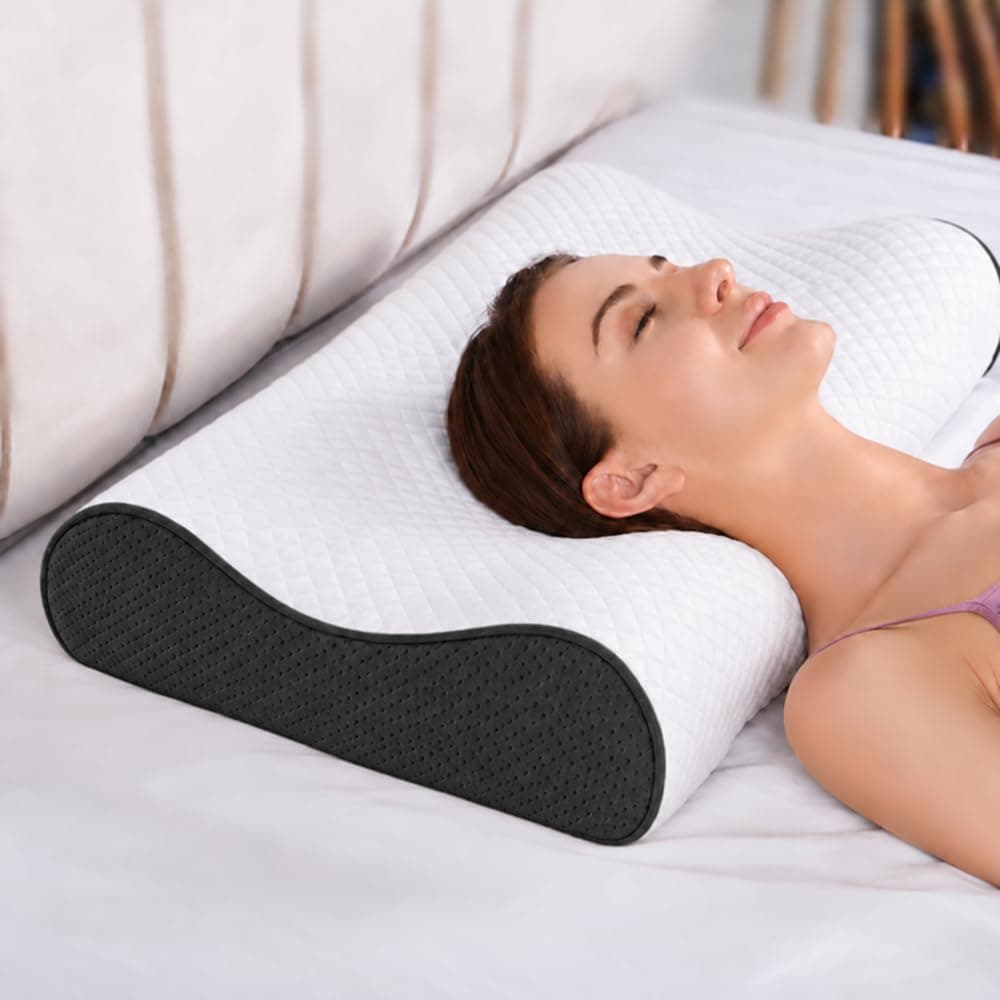
IDITRI Cervical Memory Foam Pillow, Natural Neck Curve Support, Ash Black
-38%₹74900
M.R.P.:
₹1,199.00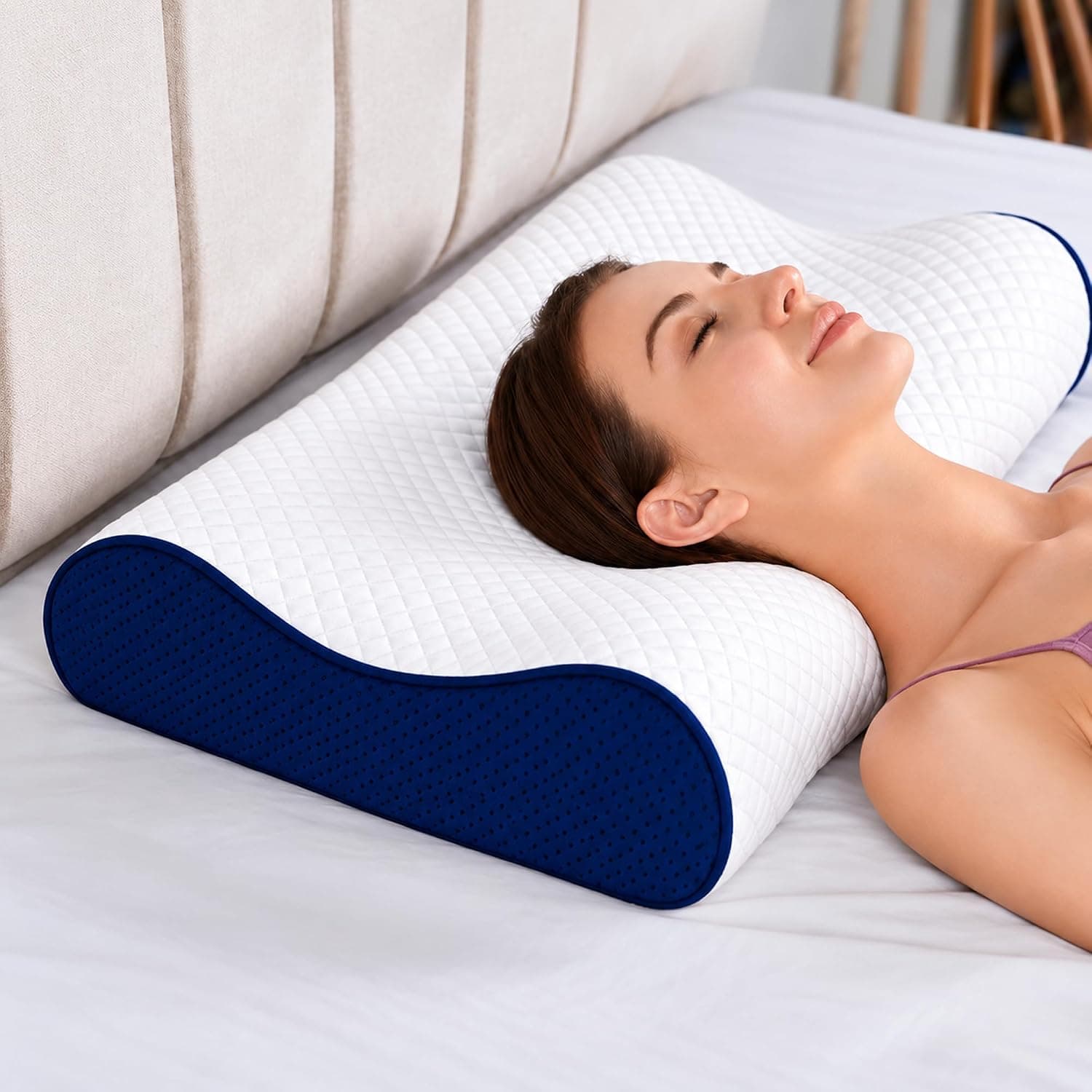
IDITRI Neck Support Pillow for Sleeping, Side Sleeper Gap Fill, Navy Blue
-29%₹84900
M.R.P.:
₹1,199.00