7 Things to Check Before You Buy a Memory Foam Pillow
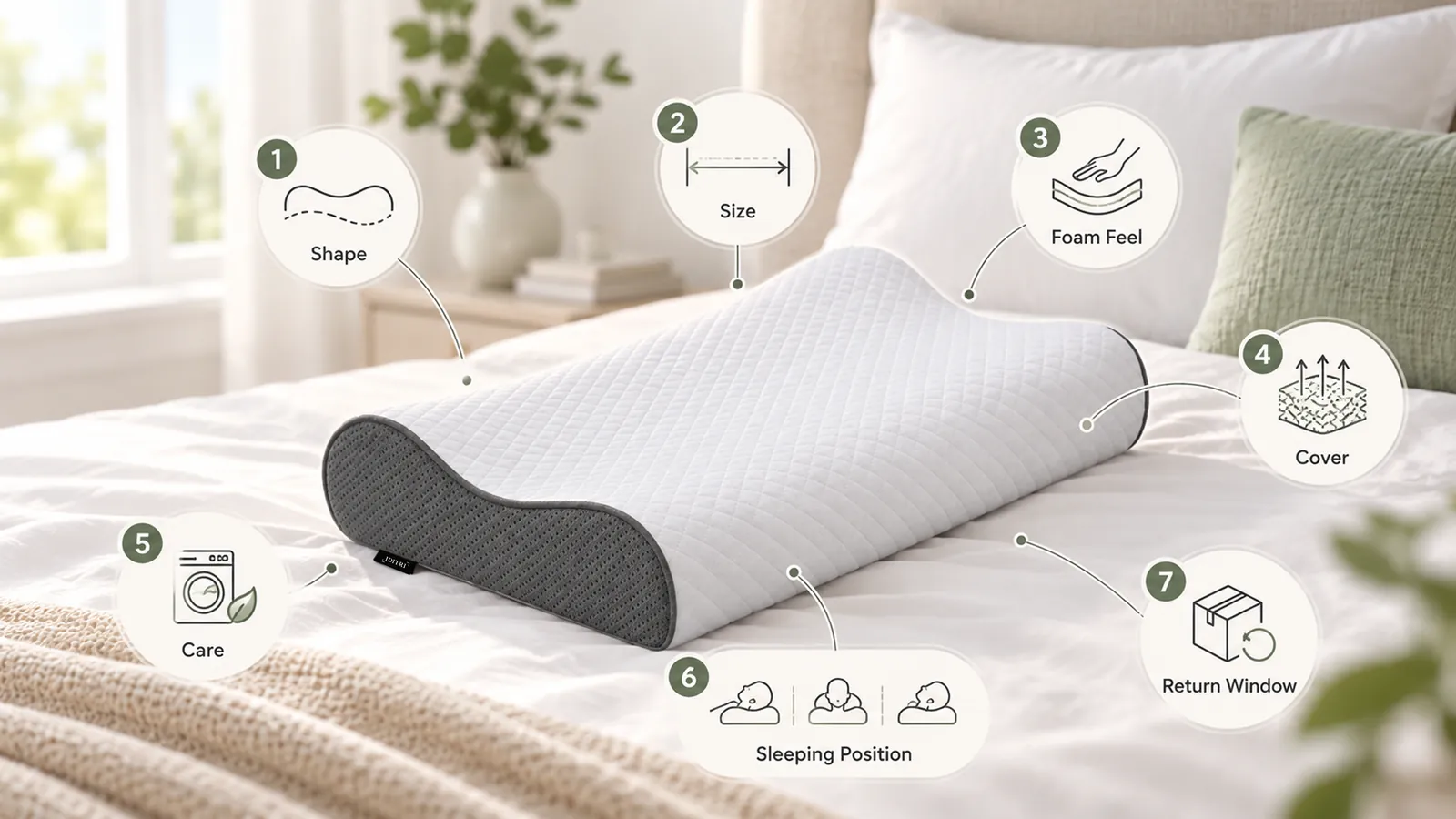
A simple seven-point checklist covering shape, size, foam feel, cover, care, sleeping position and returns, so your next memory foam pillow suits you from the very first night.
Choosing a memory foam pillow is easier when you work through a checklist.
Walk into any shop or scroll any listing and the choice feels endless. Different shapes, sizes, colours and claims all compete for attention, and it is easy to end up buying whatever looks nicest. A short checklist keeps you focused on what actually decides comfort.
Use the seven points below as your guide. They are general wellness tips for choosing comfort, not medical advice, and anyone with ongoing neck or back concerns should speak to a healthcare professional first.
1. Shape
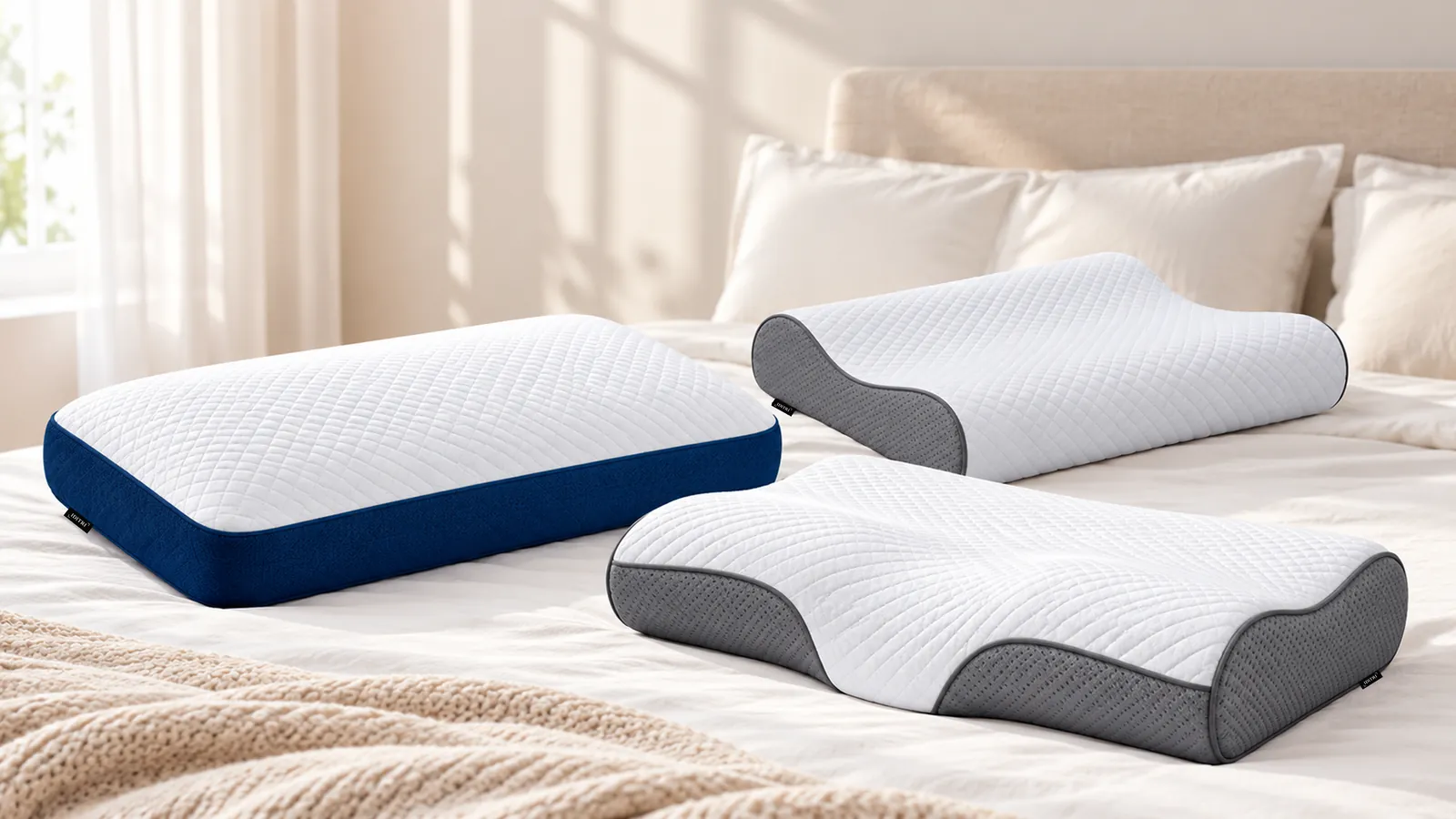
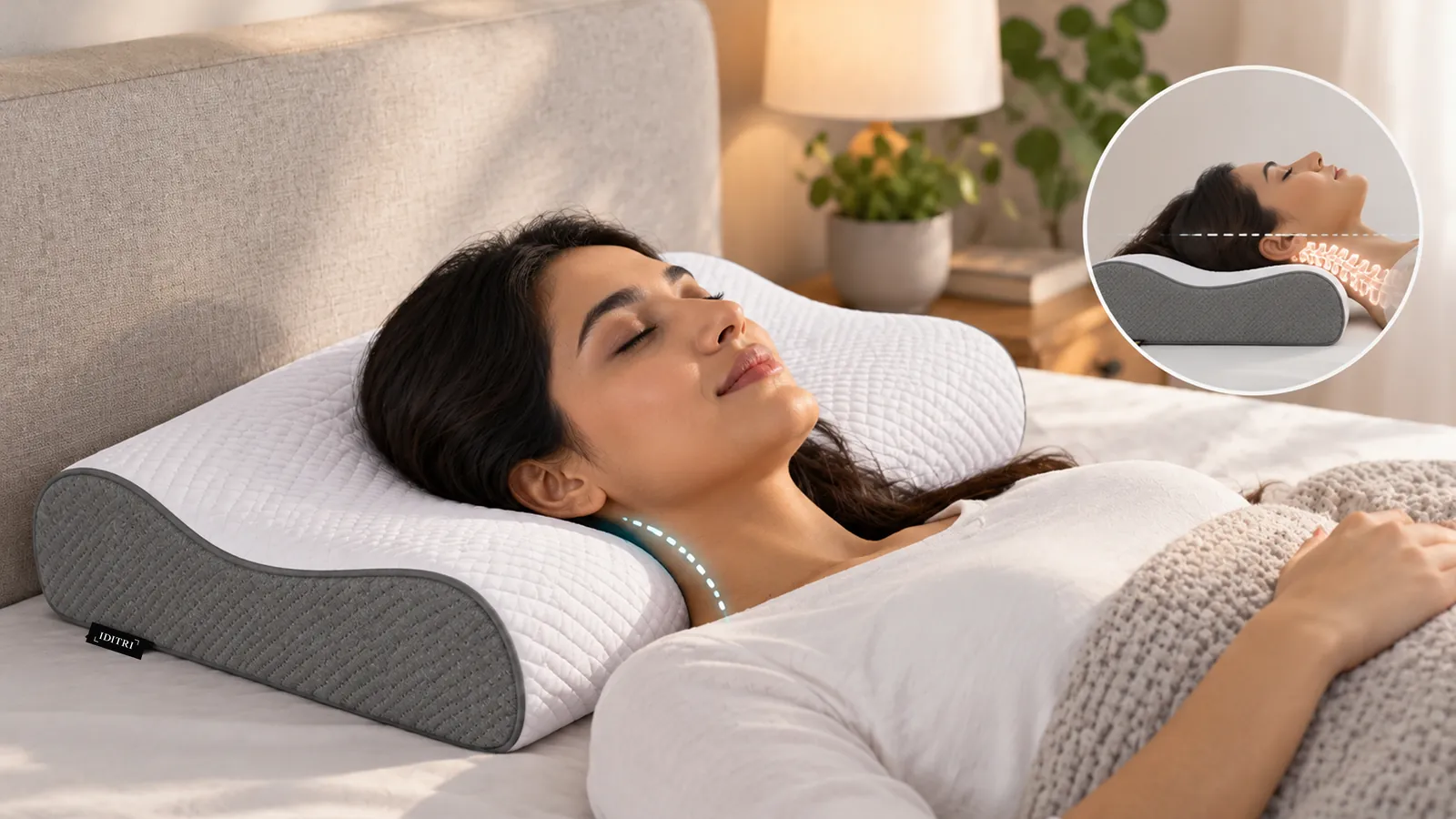
Start with the silhouette. A rectangle is an even block that suits most sleepers and most beds. A contour has a raised edge for the neck and a dip for the head, while a cervical shape is more sculpted still.
Pick the shape that matches how you like to rest, because shape changes where your neck is held far more than any other feature.
If you are unsure, an even rectangular block is a safe starting point, since you can reposition it easily and it does not ask you to lie in one fixed way.
A useful habit is to note the shape you like on your current pillow, and then look for the closest match.
2. Size
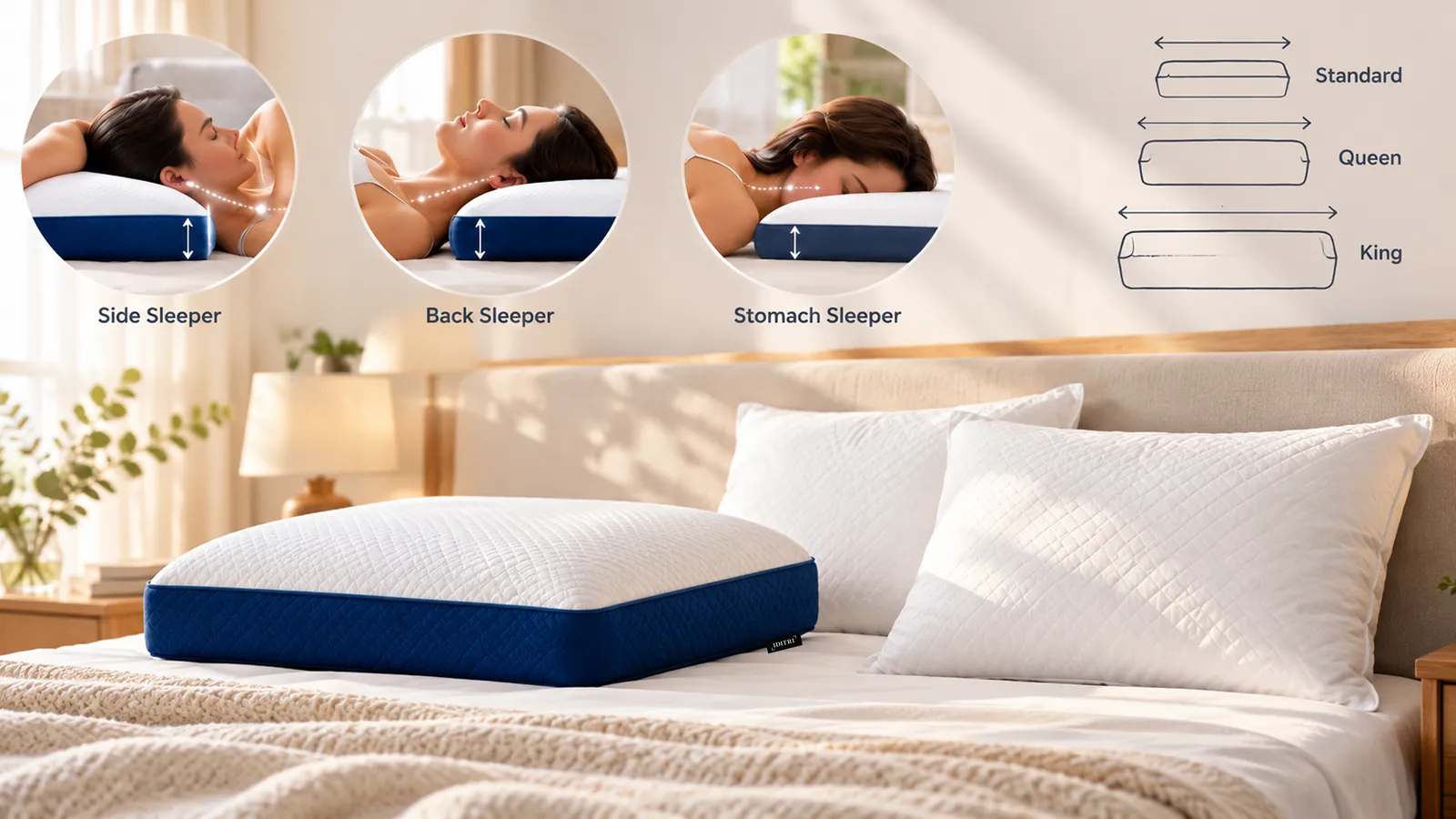
Check the dimensions on the listing and compare them with your bed and your current pillowcases. The IDITRI range comes in a 19 x 12 x 4 inch block, which is worth measuring against what you own now.
A pillow that is too tall or too short will not rest your neck evenly, so height matters as much as length.
Think about your mattress and shoulder width too. A broader frame usually needs a little more height to fill the gap when lying on one side, while a lighter build may be happier with something lower.
3. Foam feel
Memory foam comes in different feels. Some pillows have a soft, plush first touch, while others are medium firm and hold the head up from the start. Read the description for words such as soft firm, medium firm or slow sink-in.
If you like to sink in gently, look for a softer description. If you dislike feeling stuck in your pillow, lean towards something firmer.
A good test is how the foam behaves after you get up. Quality memory foam should rise back to its shape and not hold a dent for long, so it feels the same on the tenth night as it did on the first.
4. Cover and 5. Care
Look for a zip-off cover that you can wash following its care label. A removable cover makes regular freshening quick and simple.
Also check how the foam core is cleaned. Most foam pillows are spot cleaned and then left to air dry fully before the cover goes back on, so confirm that this suits your routine. A pillow that is simple to freshen is one you will actually keep clean.
Handy tip: Never put a foam core in a hot dryer or leave it in direct sun, as high heat can damage it.
6. Your sleeping position
Your habits decide the rest. As a rough guide:
- Side sleepers usually need more height to fill the gap between ear and shoulder
- Back sleepers usually prefer a lower, more even surface
- Stomach sleepers are often more comfortable with the lowest, softest option
If you move between positions, an even rectangular block is often the easiest all-rounder.
7. The return window
Pillows are personal, so it is wise to know your options before ordering. Check the return window on the listing and read the conditions, so you can try the pillow for several nights without worry.
Remember that foam can feel different from what you are used to. Give your body a little time to adjust before you decide, ideally a week or so in your usual sleeping position.
Putting the checklist to work
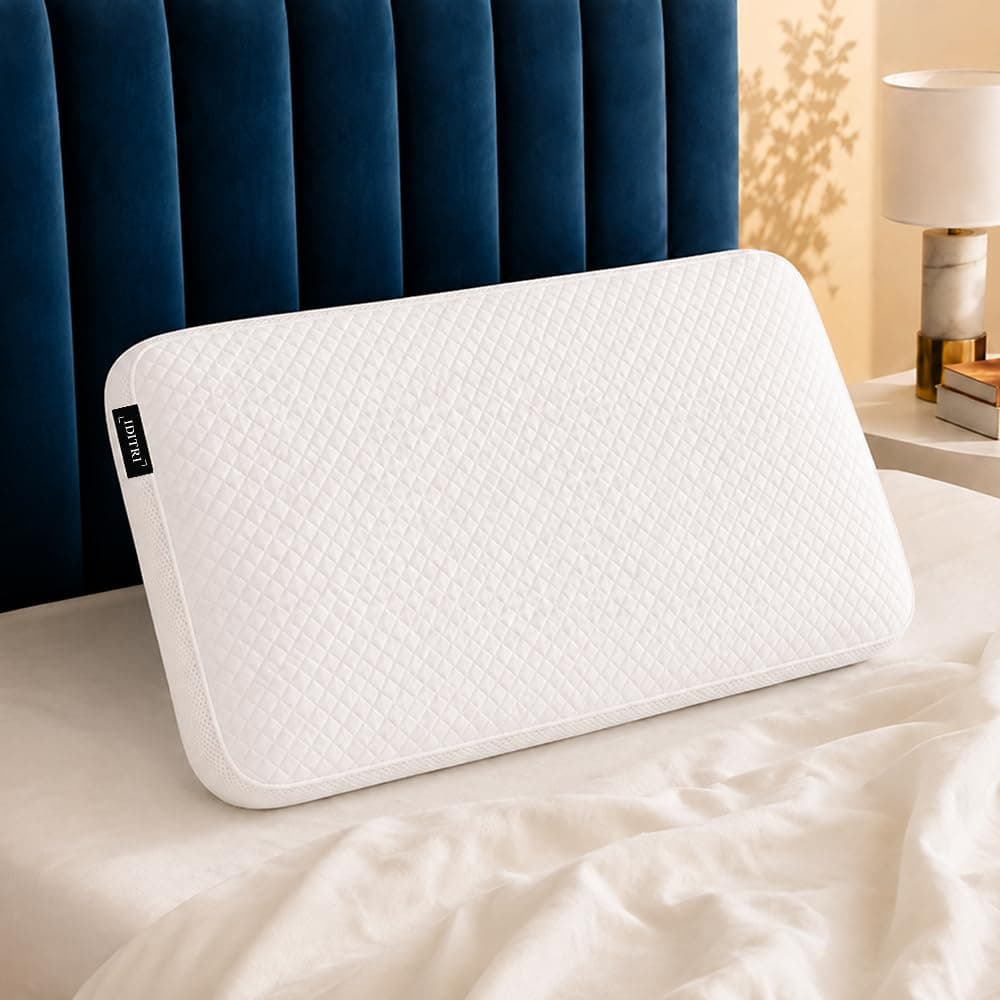
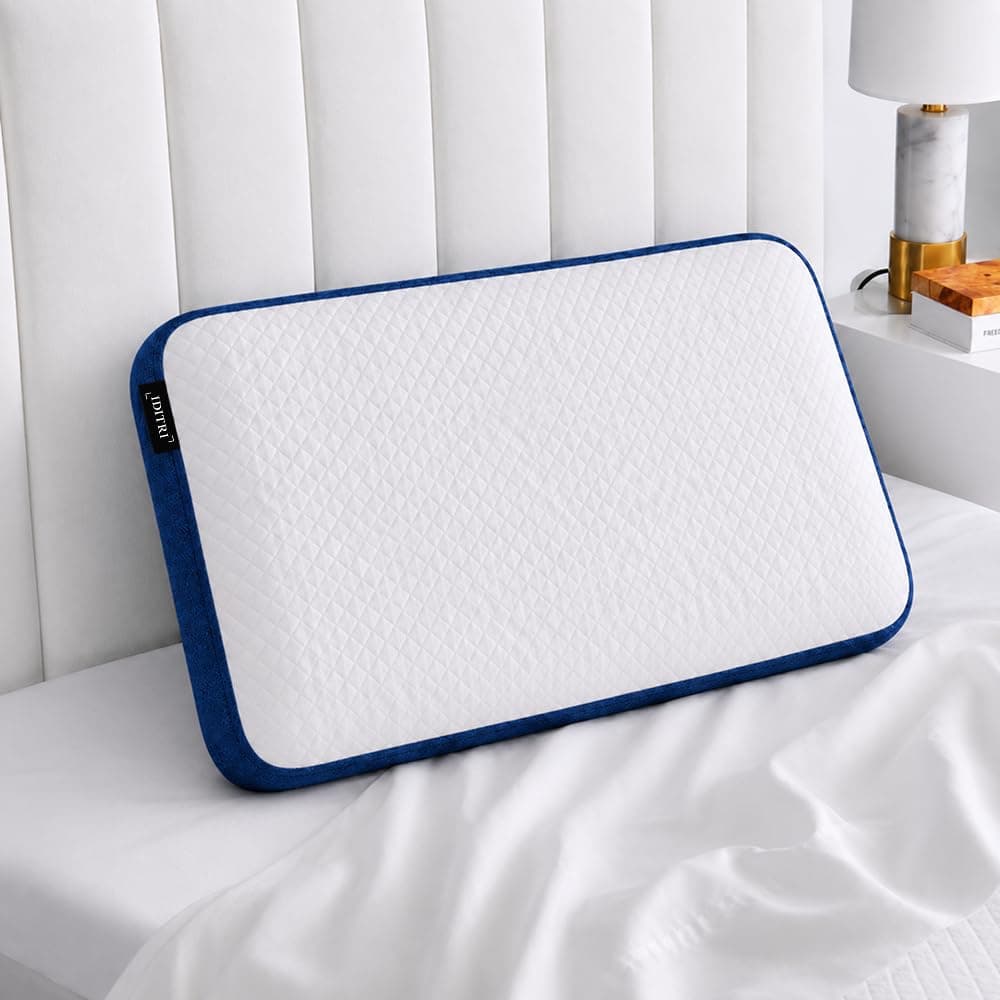
The IDITRI Bed Pillow in Milk White is a rectangular block with a soft firm feel, a zip-off spandex cover and a shape that holds between uses. For a plusher first touch, compare the Navy Blue hotel-style pillow.
You can see every option in our rectangle pillows and contour pillows collections. A pillow supports comfortable sleep but is not a treatment, so keep your healthcare professional in the loop for persistent discomfort.