How to Choose the Right Pillow Height and Size for Your Bed
Pillow height and size shape how comfortable your head and neck feel at night. Learn how to match both to your sleeping position, shoulders and bed width before you buy.
The right pillow height and size make the biggest difference to comfort.
Most people shop for a pillow by feel, yet two measurements quietly decide whether it works for you: how tall it sits and how wide it is. A pillow that is too low lets your head drop, while one that is too high pushes it forward, and a pillow that is too small leaves your shoulders and the edge of the mattress without support.
This guide shows you how to match height and size to your body and your bed. It is general wellness guidance and not a substitute for personalised medical advice.
Why height matters for your head and neck
Your pillow's job is to fill the gap between your head and the mattress so that your head, neck and spine sit in a comfortable, level line. How big that gap is depends on how you sleep, and on how broad your shoulders are.
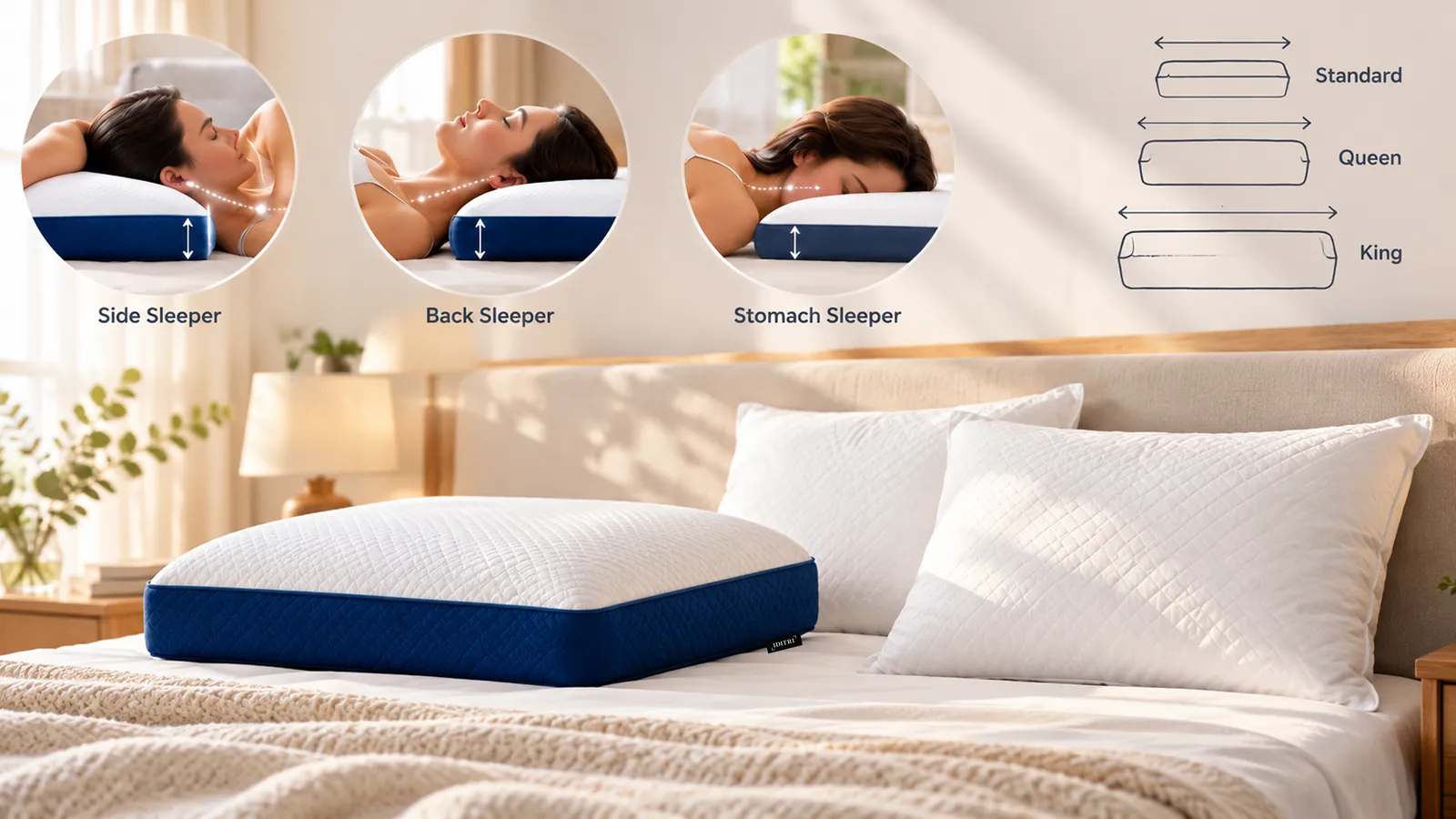
Side sleepers have the largest gap, so they generally need more height. Back sleepers need a moderate height that supports the natural curve of the neck without tipping the chin toward the chest. Stomach sleepers usually feel better with something lower, since a tall pillow increases the twist in the neck.
Shoulder width matters here too. A broad frame needs more height to fill the gap, so two people of the same sleeping position can need quite different pillows.
A quick height check you can do at home
You can test a pillow without any special equipment. Lie in your usual position and ask a friend or partner to look at you from the side, or take a quick photo.
- Lie on your side or back with the pillow in your normal position.
- Check that your nose is roughly in line with the middle of your chest.
- Make sure your chin is neither tucked nor pointing at the ceiling.
- Notice whether your shoulder feels free or squashed.
If the answer to any of these is no, the pillow is probably too low or too high for you.
Size: matching the pillow to your bed
Size is about more than looks. A broader pillow gives you room to roll over without your head slipping off the edge, and it fills the space across the top of the bed neatly.
Rule of thumb: think about the width of the bed. A pair of full-size pillows suits most double beds, while a larger bed often looks and feels better with generous, king-size pillows.
If you move around a lot at night, choose the wider option. If you sleep still and like to tuck the pillow in close, a more compact size can feel just as comfortable.
Where the IDITRI Memory Foam Bed Pillow fits
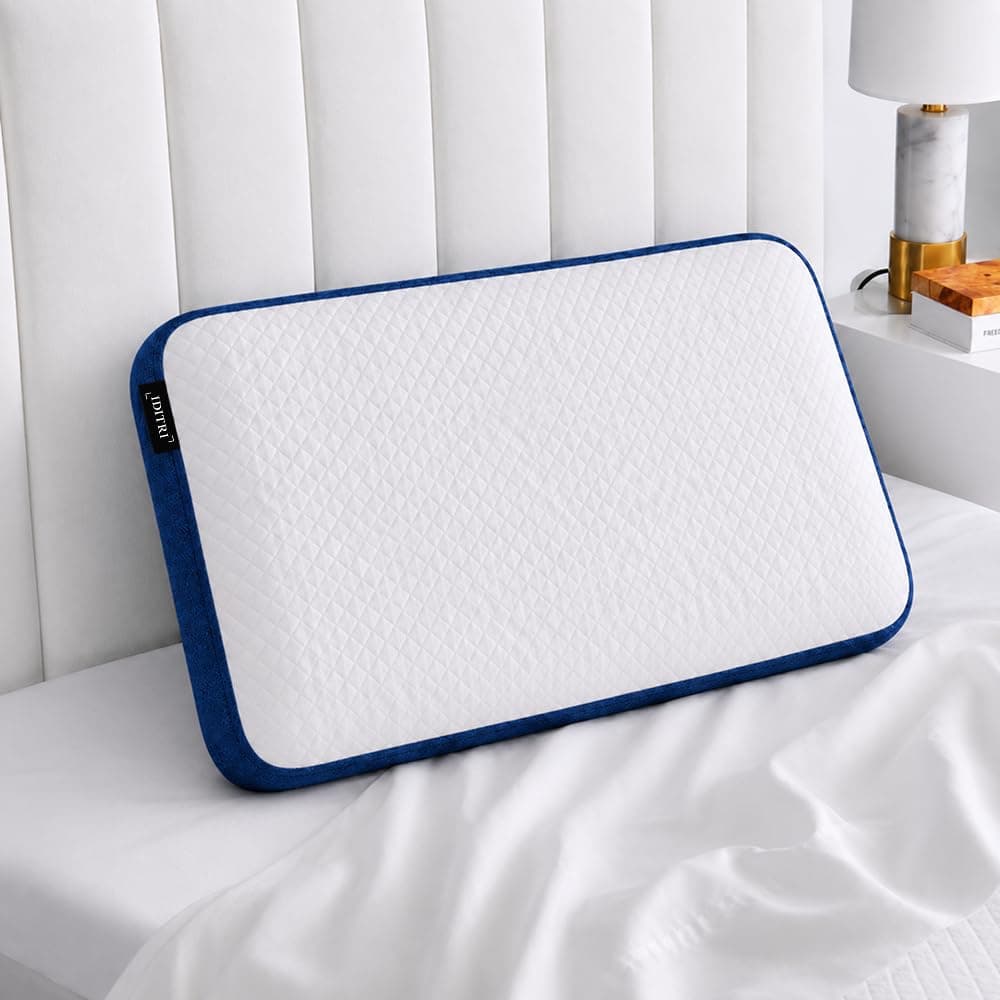
The IDITRI Memory Foam Bed Pillow in Navy Blue is a good example of a spacious option. It measures 24 x 14 x 4.5 inches, a king-size fit with room for the head, neck and shoulders. Here is what stands out:
- Traditional rectangle shape built with memory foam instead of standard fibre fill
- Suitable for side and back sleepers
- High-density memory foam designed to hold its shape through regular use
- Removable cover for easy cleaning
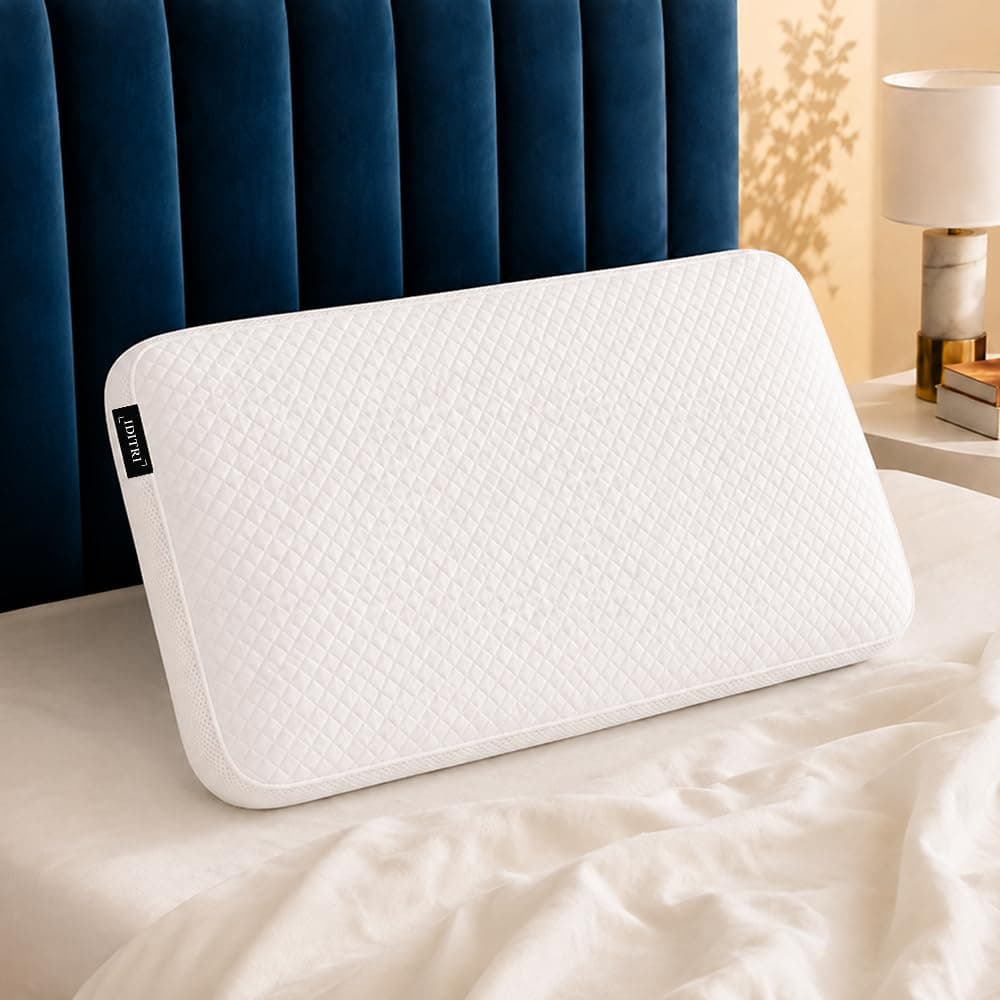
Prefer a lighter shade? The White version offers the same shape and size. You can view every option on the rectangle pillows page.
When a more shaped pillow may suit you better
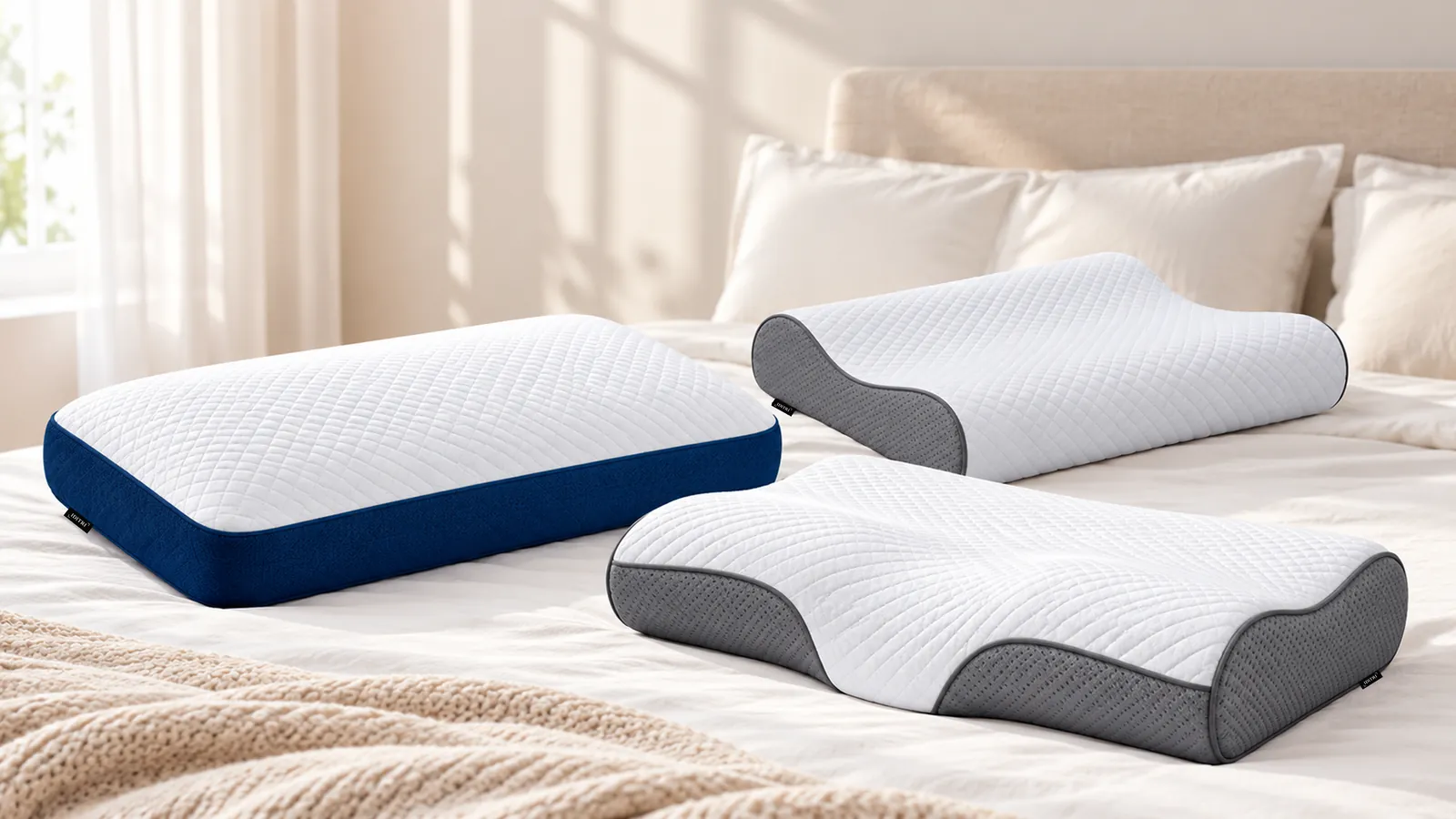
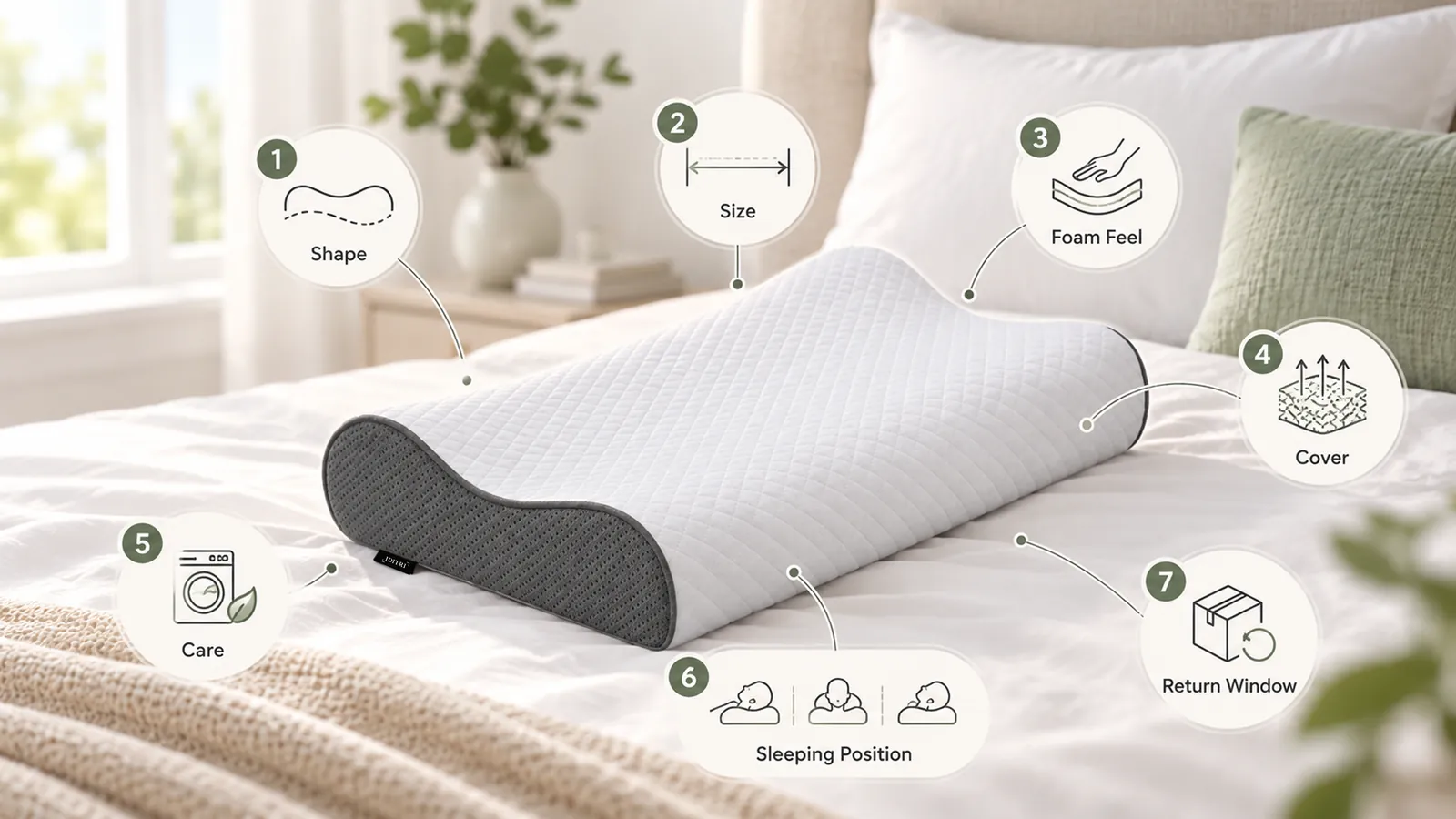
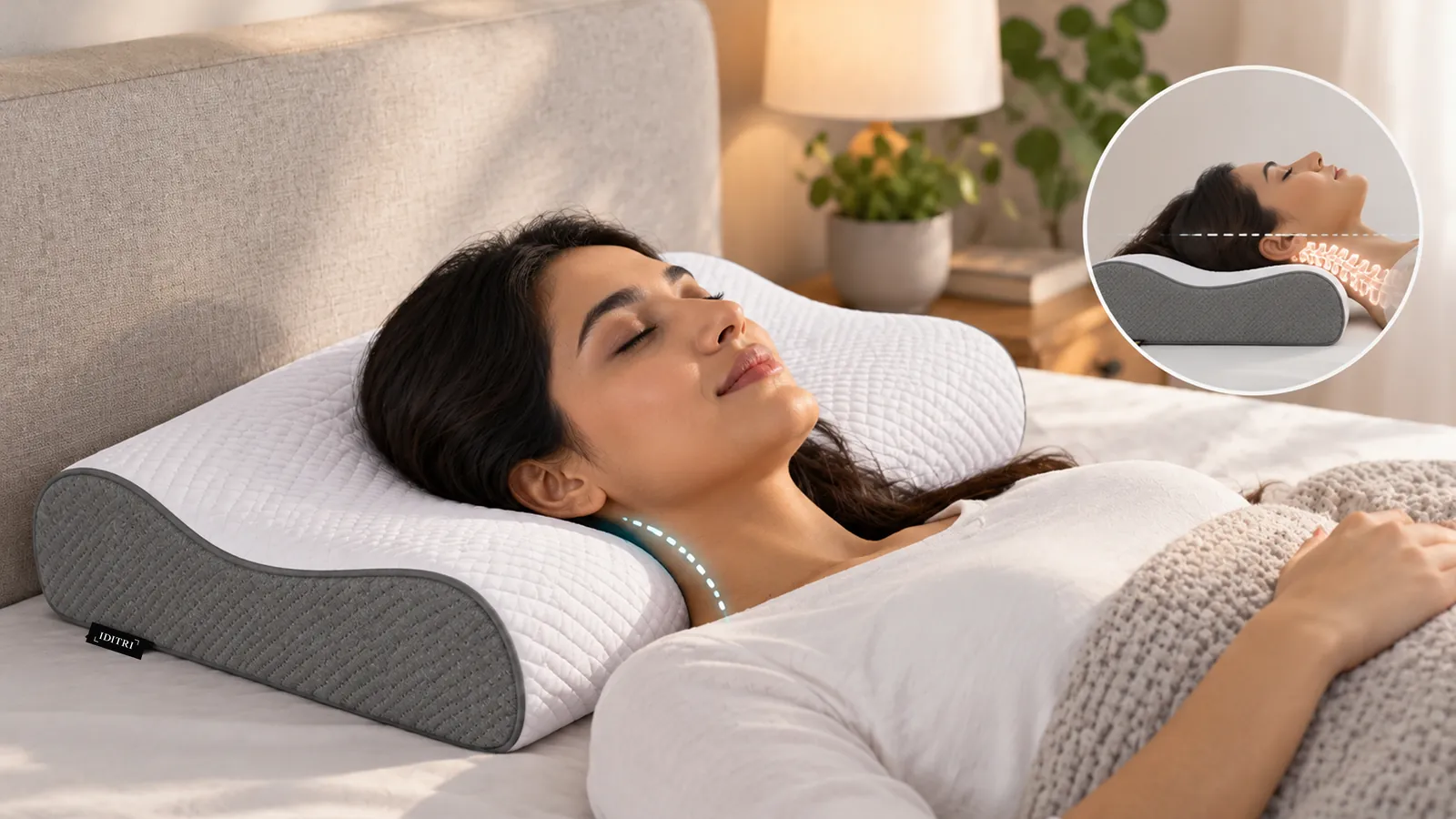
A flat-topped rectangle is a good everyday choice, but it does not have the raised edge of a shaped pillow. If you want more defined support under the neck, take a look at our cervical pillows, which are designed with a curve to cradle the neck.
Whichever you pick, keep the rest of your setup in mind. A softer mattress lets your shoulder sink in, so you may need a slightly lower pillow, while a firmer mattress often calls for a little more height.
Give yourself time to adjust
A new pillow will not feel perfect on the first night. Allow a week or two to settle in, and try it in your main sleeping position before judging it.
If you wake with ongoing neck pain, numbness or tingling, please speak to a qualified healthcare professional. The right pillow is designed to support comfortable sleep, but it is not a treatment, and persistent symptoms deserve proper advice.